A GDPR Compliance Checklist
A GDPR Compliance Checklist
The GDPR, introduced on 25 May 2018, will bring about a new era in data management, granting EU citizens greater control over their data and imposing heavier fines for any breaches.
Given the reach of this regulation, it is important for every organization to possess the correct data regarding GDPR recommendations, characteristics, and the protective steps needed to comply effectively.
What conditions must be met to comply with the GDPR?
GDPR has in effect increased the compliance burden for many organizations worldwide. Fortunately, the specific details are clearly stated, meaning there is no real excuse for any entity to fall afoul of the law.
Many major organizations are now fully compliant with GDPR. However, some may only be entering European markets now, while others may not have addressed the rules soon enough and now face potential risk.
For these organizations, as well as anyone who needs support, several helpful resources are available.
GDPR Checklist traces the four Compliance classes:
- Legitimate premise and straightforwardness
- Carry out a data audit to establish what data you process and who can access it.
- Ensure you have a lawful basis for your data processing activities.
- State clearly in your privacy policy how you process data and what legal grounds you rely on.
- Information/Data security
- Consider data protection throughout, from when you start developing a product to every time you process data.
- Encrypt, pseudonymize, or anonymize personal data whenever possible.
- Create an internal security policy for your staff and build awareness of data protection.
- Governance and Accountability:
- Appoint someone responsible for ensuring GDPR compliance across your organization.
- Establish data processing agreements between your organization and any third parties that process personal data on your behalf.
- If your organization is outside the EU, appoint a representative in one of the EU member states.
- Privacy/Protection rights:
- It is easy for your customers to request and receive all the data you hold about them.
- It is easy for your customers to correct or update inaccurate or incomplete data.
- It is easy for your customers to request that their personal data be erased.
- It is easy for your customers to ask you to stop processing their data.
- It is easy for your customers to obtain a copy of their personal data in a format that can be readily transferred to another organization.
- It is easy for your customers to object to your processing of their data.
- If you make decisions about individuals based on automated measures, you have a framework to safeguard their rights.
Five-step preparation checklist:
- Start by contemplating GDPR legislation altogether
- Evaluate how the GDPR affects your organization.
- Determine whether moves must be made.
- Create a risk analysis for managing potential risks.
- Implement appropriate internal procedures
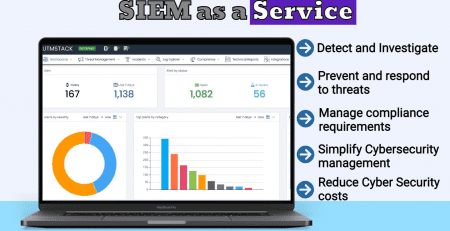
Similar to the previous point, equipping your IT security team with the right tools is essential to ensure data security in accordance with the GDPR legal framework. We strongly recommend that you include an effective SIEM solution/arrangement among these tools.
Advantages of SIEM Solutions for GDPR
- SIEM tools are excellent at collecting, recording, and processing fully encrypted data.
- It is effective in demonstrating the existence of proper data monitoring.
- It detects malicious behavior that could lead to the violation of personal data.
- Collects and analyzes data in a fast and efficient manner.
- Provides ongoing real-time incident response to support the GDPR notification requirement before the 72-hour mark following an incident.