The 10 Best Vulnerability Scanning Tools for 2026
By 8:30 a.m., the scan report no longer reflects reality. Overnight, new cloud instances spun up, a container image was rebuilt, developers released code, and the security queue holds findings that still require triage, ownership, and context. Detection is seldom the difficult part. The difficult part is choosing what to remediate first and making that choice move into the systems your team already uses daily.
This guide approaches the topic through that lens. Vulnerability scanners provide limited value by themselves if they only deliver a list of CVEs. A critical test is whether they send asset context into SIEM, activate response via SOAR, enhance XDR investigations, create actionable tickets for infrastructure and engineering teams, and enable compliance reporting without adding another manual process. Teams that put findings into operation effectively tend to focus less on raw scan volume and more on correlation, prioritization, and response speed.
The market no longer aligns with a single category either. Some tools remain best suited to conventional network discovery and authenticated host scans. Others excel in cloud posture, agent-based exposure analysis, web application testing, container visibility, or software delivery workflows. In practice, mature programs typically combine methods instead of making one scanner address every environment. If you are establishing that practice from the beginning, it helps to start with an automated vulnerability scanning workflow that can integrate with the rest of your stack rather than function as a standalone report generator.
If you are also pushing remediation earlier into engineering, this guide pairs well with integrating security into SDLC.
Table of Contents
- 1. Unified Security Stack: Vulnerability Management
- 2. Tenable Nessus and Tenable Vulnerability Management
- 3. Qualys VMDR
- 4. Rapid7 InsightVM
- 5) Microsoft Defender Vulnerability Management
- 6. Greenbone / OpenVAS
- 7. Exposure Management by CrowdStrike Falcon
- 8. Wiz
- 9. Orca Security
- 10. Invicti
- Top 10 Vulnerability Scanners, Feature & Capability Comparison
- Final Thoughts
1. Unified Security Stack: Vulnerability Management
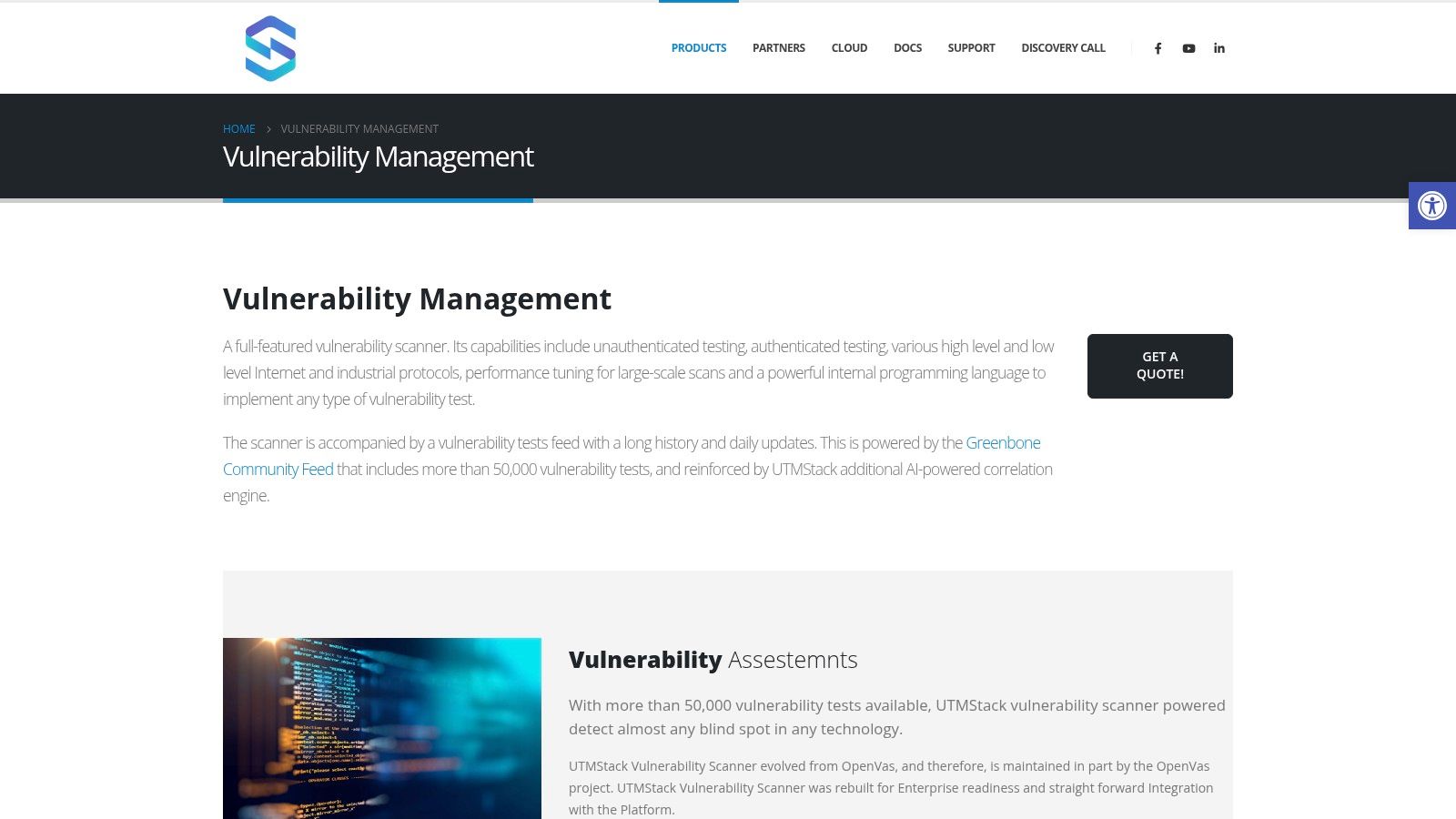
Unified Security Stack Vulnerability Management is the strongest match in this case for teams that do not simply want to scan. They want to turn findings into operations within the same system that already manages detection, response, and compliance evidence. That alters the day-to-day workflow more than yet another dashboard would.
The product traces its origins to OpenVAS, yet it is designed for enterprise use and hybrid environments. It enables authenticated and unauthenticated scanning, wide protocol coverage, cloud-native assessments across AWS, Azure, and GCP, and over 50,000 vulnerability tests updated daily. That range is important when asset coverage is spread across legacy hosts, remote endpoints, and cloud workloads.
Why it stands out operationally
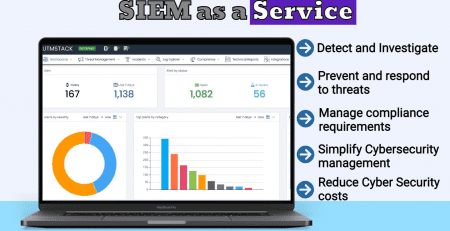
The main advantage of Unified Security Stack is that vulnerability data does not end once an issue is found. Findings can be linked with logs, alerts, and broader telemetry in the SIEM, SOAR, and XDR stack within the platform. This makes prioritization more effective because teams can assess exposure alongside live activity rather than looking only at severity labels in isolation.
Practical rule: If your scanner cannot feed response automation, you are still operating a reporting tool, not a remediation program.
In that respect, the platform resembles a security operations system more than a standalone scanner. If a high-risk asset shows vulnerable software along with suspicious authentication or network activity, that calls for a different decision than finding the same CVE on an inactive lab machine. Teams seeking a tighter loop from scan to containment should take a close look at Unified Security Stack automated vulnerability scanning.
Compliance mapping delivers a further operational advantage. If auditors ask for evidence linked to PCI, HIPAA, ISO 27001, GDPR, or similar controls, the security team can avoid manually gathering results from different products.
Where it fits best
Unified Security Stack is a solid option for organizations that want open-source foundations without accepting a DIY-only experience. It also suits MSPs, MSSPs, and internal SOC teams that require one place to ingest telemetry, orchestrate response, and demonstrate remediation progress.
The trade-off is clear. You will gain more value if you already have staff who can properly tune detections, workflows, and scan scope. Large scans and extensive platform integration can also require planning for performance, orchestration, and ownership across SecOps and infrastructure teams.
- Best for unified operations: Security teams that want scanner output connected directly to incident response and compliance evidence.
- Strong hybrid coverage: Valuable across on-prem, cloud, and mixed environments where multiple asset types create blind spots.
- Less ideal for minimalists: If you only need a basic scanner and do not plan to integrate the output, the platform may exceed your needs.
2. Tenable Nessus and Tenable Vulnerability Management
A common scenario unfolds this way. The security team can scan, but it still has trouble answering the harder questions once findings arrive. Which issues should go into SIEM for correlation, which should automatically open tickets, and which are severe enough to set off containment playbooks in SOAR or XDR? Tenable remains relevant because it provides teams with a mature starting point for that workflow, particularly when they need reliable infrastructure scanning before they build wider exposure operations around it.
The division between the products is practical. Nessus suits teams that want a proven scanner with strong network and host coverage under their own control. Tenable Vulnerability Management suits organizations that need centralized visibility, multi-scanner coordination, asset context, and reporting that can support remediation programs rather than remain in isolated scan exports.
Best use case
Tenable is effective in settings where consistency carries more weight than novelty. Its plugin library, scan policies, and well-known operating model simplify standardization across internal teams, consultants, and service providers that have already used it elsewhere. That is important during rollout. It is equally important six months later, when the leading question is not whether scanning can happen, but whether ownership can be assigned, noise can be suppressed safely, and the right findings can reach the systems the SOC already monitors.
That is where the trade-off becomes apparent.
Nessus frequently represents an effective first acquisition. It provides security teams with a reliable scanner and consistent outcomes. However, organizations with larger environments typically discover that scanning by itself does not complete the cycle. They still require asset criticality, process discipline, ticketing integration, and transparent reporting for risk and audit stakeholders. Teams seeking to connect scanner results to policy evidence should also evaluate how those findings translate into governance workflows and GRC tooling for compliance and risk reporting.
Tenable can address many of those needs, though the capabilities sit throughout the wider platform. If your roadmap covers external attack surface monitoring, web application testing, or more advanced exposure analytics, treat them as distinct architecture and budget choices from the start. I have watched teams overlook that step, only to spend months integrating scanner output into SIEM rules, SOAR playbooks, CMDB records, and patch queues after buying.
CISA guidance on vulnerability scanning offers a helpful benchmark, describing scanning as one component of a broader vulnerability management process, not a one-off detection task. That is the proper lens for assessing Tenable. The product performs best when scan data flows cleanly into the rest of the security stack and prompts action across operations, rather than being used as a standalone reporting tool.
Tenable is still a strong option for mature programs centered on infrastructure. Just enter with a well-defined scope. Scanning itself is typically the simple part. The greater challenge is turning findings into operational practice across SecOps, IT operations, and compliance teams.
3. Qualys VMDR
Many Qualys deployments begin in that same pattern. Security seeks greater visibility across servers, endpoints, cloud workloads, and remote assets. Half a year later, the real measure is not scan coverage. It is whether findings move into ticket queues, patch cycles, compliance evidence, and SIEM or SOAR workflows without endless manual cleanup.
Qualys VMDR It is built for that type of environment. The platform unites asset discovery, vulnerability assessment, prioritization, and patch coordination in one SaaS model. That is important in large programs where separate tools often lead to ownership conflicts and duplicate inventories before remediation starts.
Qualys usually fits best in organizations that require a single operating view across hybrid infrastructure and value auditability alongside detection. Agents, scanners, passive discovery, and policy or compliance data can all contribute to the same record set, making it simpler to give vulnerability data to security operations, IT operations, and audit teams without debating which system is right. In practice, that common data model is among its greatest strengths.
The downside is complexity. Qualys is generally easier to justify in enterprises than in smaller security teams because the platform expects mature processes. If patching, exception handling, asset ownership, and escalation paths remain informal, VMDR can reveal that disorder more quickly than it resolves it.
It also suits teams that intend to put findings to work beyond the scanner. Qualys data can enable downstream actions in SIEM, SOAR, and XDR initiatives, but that only delivers value when the surrounding processes are established. I have seen teams purchase it for visibility, then discover that the difficult work was linking asset context to owners, maintenance windows, and remediation SLAs.
For governance-focused programs, that framework is valuable. Teams that also need scanner output to support policy evidence and risk reporting may want to examine related options in best GRC tools, particularly when vulnerability status must feed audit or compliance workflows.
- Strong fit for large, process-heavy environments: A solid option when asset inventory, remediation tracking, and evidence gathering must reside within one program.
- Useful for response orchestration: Findings become more actionable when they flow into ticketing, patch workflows, and wider SecOps tooling rather than remaining in scanner reports.
- Less comfortable for lean teams: Licensing, modules, and workflow complexity can seem burdensome when the primary need is basic scanning with minimal operational overhead.
4. Rapid7 InsightVM
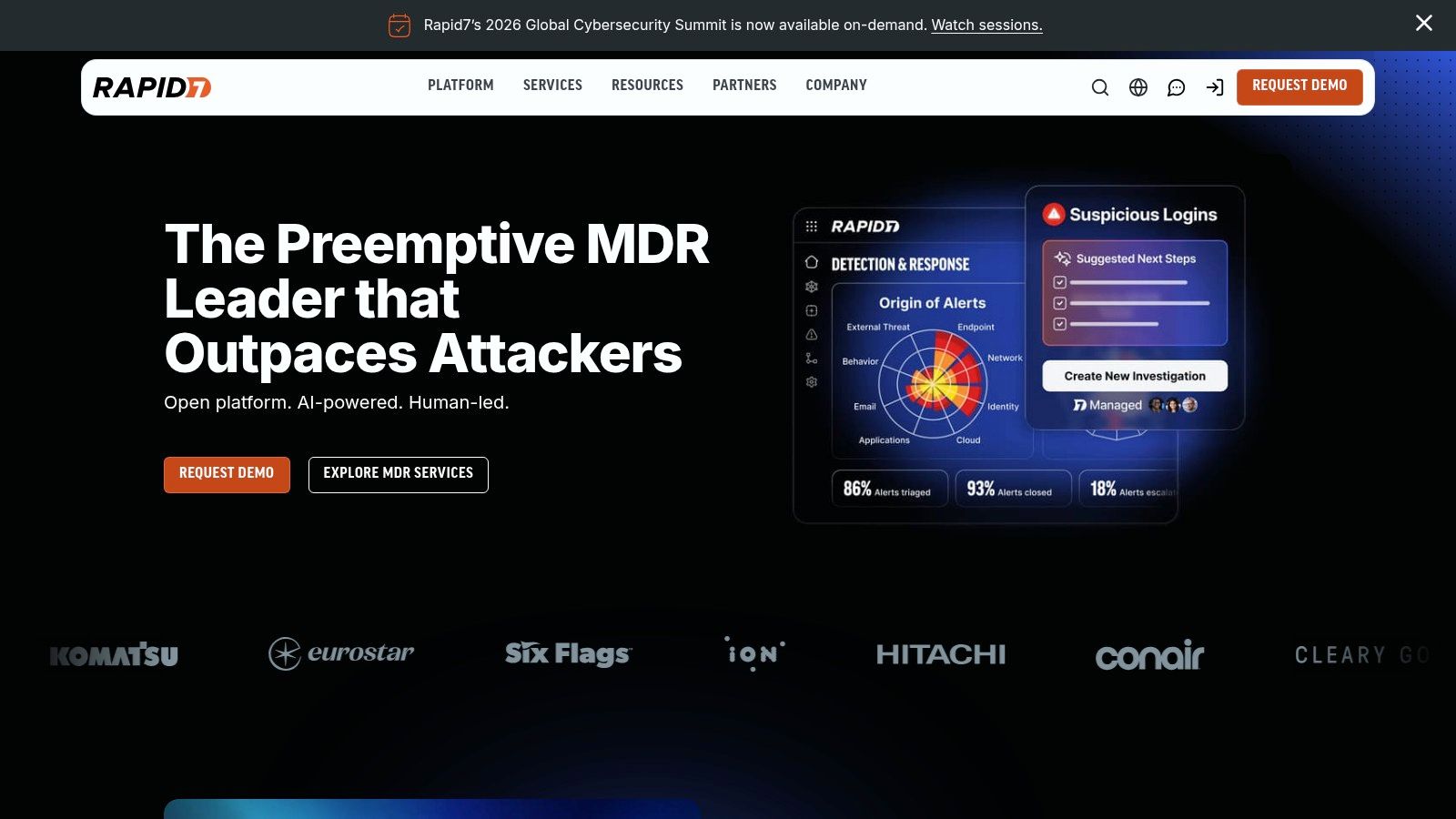
Rapid7 It has long been strong where many vulnerability tools are weak. It is built for remediation operations, not merely vulnerability discovery. InsightVM, now tied into Exposure Command, is often easiest to appreciate after you have been through a few scan programs that produced decent findings but never moved tickets fast enough.
The product blends agent and agentless approaches, internal visibility, and external context, helping connect classic VM with broader exposure management. That is valuable when the issue is no longer simply what is vulnerable, but what is reachable, important, and likely to be exploited first.
Operational strengths
Rapid7 typically works well for teams that require clear remediation projects with deadlines, assigned owners, and ITSM integrations. Operationally, that translates to less spreadsheet cleanup and fewer fragmented conversations between security analysts and sysadmins.
Recent practitioner guidance places growing emphasis on prioritization, business impact, automation, and integration as leading differentiators in scanner selection. Red Canary observes that tools depend on continuously refreshed vulnerability intelligence such as CISA's Known Exploited Vulnerabilities catalog, yet triage backlog remains a major issue in Red Canary's discussion of vulnerability scanning tools. Rapid7 aligns well with that shift because it is designed to drive action from prioritized results.
Licensing drift is one possible pitfall. Rapid7's value grows as you adopt more of the wider platform, but so does cost. Asset-based pricing can also become costly if you do not define scope carefully, particularly in environments with temporary assets or inconsistent asset hygiene.
The strongest Rapid7 deployments maintain tight asset governance. The messiest ones scan everything, own nothing, and then blame the tool for the backlog.
5) Microsoft Defender Vulnerability Management
Microsoft Defender Vulnerability Management When Microsoft Defender for Endpoint is already in use and you want to avoid adding another agent or a separate scanner console, this is the clear choice. In that setup, the product can be highly efficient.
This isn't the tool I would pick first for every environment. It is one I would pick quickly for Microsoft-heavy estates that want endpoint-centric vulnerability visibility tied directly to remediation tracking, security operations, and the broader Microsoft security stack.
Best fit
MDVM is at its best when endpoint telemetry already resides in Microsoft. It cuts friction, since security teams are not trying to reconcile vulnerability findings from one console with device health and incident context in another. That is a major operational win, particularly for lean teams.
Its strengths stand out in endpoint hygiene, prioritization, and workflow continuity. Security analysts can go from vulnerable software visibility to device context and response activity without switching between multiple products. For organizations standardized on Microsoft 365, Defender, Intune, and Entra, that cohesion frequently matters more than having the deepest standalone scanner in every category.
Coverage breadth beyond Microsoft's center of gravity is the constraint. When deep web application testing, external network scanning, or broad cloud-native assessment is required, MDVM will almost certainly be paired with other tools. That is not uncommon. It is the expected outcome of applying an endpoint-centric control to a wider attack surface.
- Best in Microsoft ecosystems: Most effective when Defender sensors are already in place.
- Good for reducing agent sprawl: One fewer infrastructure component to manage.
- Usually not enough alone: Most hybrid environments, or environments heavy on applications, still require complementary tooling.
6. Greenbone / OpenVAS
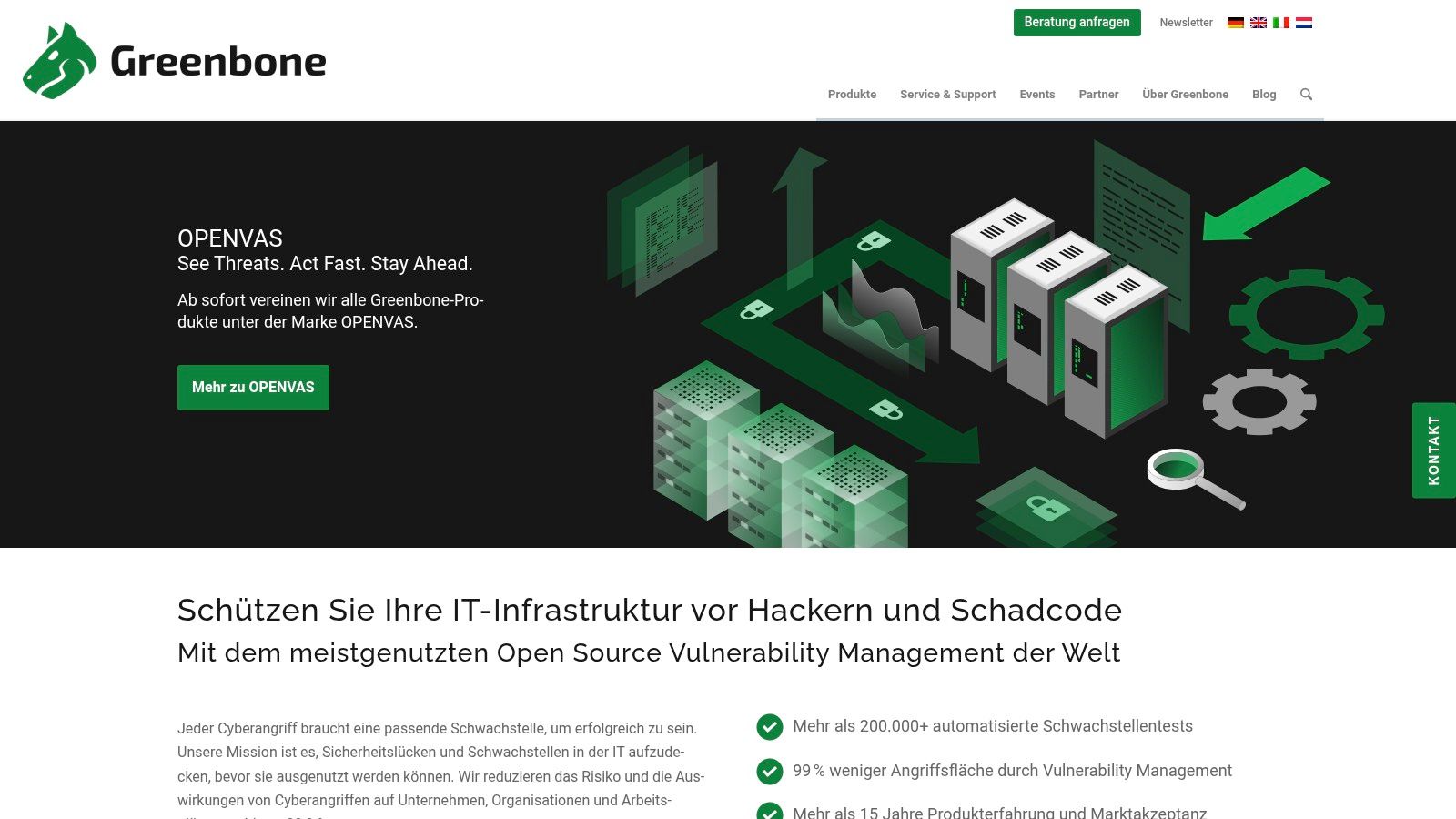
Greenbone It stays relevant because not every organization wants an entirely commercial, closed platform from the outset. OpenVAS has built a long market reputation, and Greenbone provides teams a route from community use into supported enterprise appliances or cloud delivery.
That progression matters in practice. Many security teams begin with open-source tooling because they need coverage before budget is available, not afterward.
Why teams still choose it
Greenbone is a sensible fit for organizations sensitive to budget, for teams seeking deployment flexibility, and for buyers who value EU-hosted data residency. It is also appealing when you want to keep some operational control rather than accept a rigid vendor model.
The trade-off is refinement. Reporting and user experience are more functional than those offered by some commercial competitors. That does not necessarily diminish detection quality, but it does influence adoption among wider stakeholder groups. Security engineers might accept a less polished console. Audit teams, operations managers, and executives generally will not.
Cycode reports that 40,009 new CVEs have been published since 2024, a 38% year-on-year increase, in Cycode's review of application vulnerability scanningThat growth is one reason community-rooted scanners continue to matter. Teams need automation and frequent test updates, even when budgets are constrained.
Supported open-source performs well when your team has the internal discipline to tune it. It performs poorly when leadership expects enterprise outcomes while staffing remains at community level.
Greenbone is a practical option, especially when you understand what you are buying. It is a scanner-first decision, not a choice to buy one platform that solves everything.
7. Exposure Management by CrowdStrike Falcon
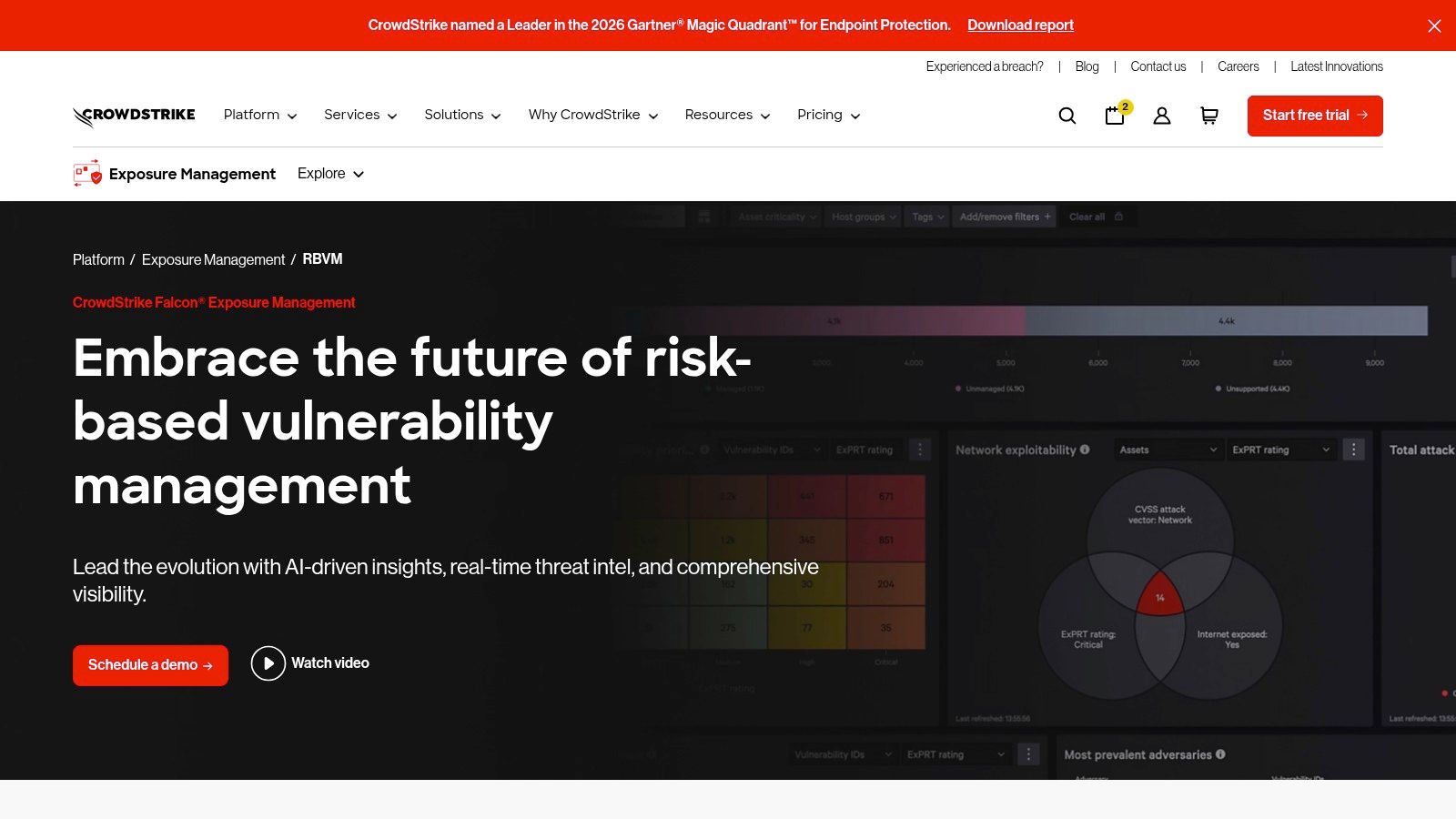
CrowdStrike Falcon Exposure Management follows a different route than traditional scanner-heavy products. If Falcon is already in use, Spotlight VM can feel refreshingly lightweight, since it depends on the existing sensor rather than separate scanner infrastructure for endpoint assessments.
That immediately changes the operational burden. There is less to deploy, fewer issues around network scan scheduling, and less debate over credentials for every scanning job.
Where it changes the workflow
CrowdStrike is at its strongest for teams that already trust Falcon as a central security operations platform. Vulnerability visibility arrives in a console analysts already use, enriched with threat intelligence and broader attack surface context. That typically improves adoption because teams do not have to learn a separate way of working.
It is also one of the clearer examples of vulnerability management becoming part of exposure management instead of a standalone discipline. Findings gain more value when they are tied to attacker behavior, asset criticality, and response context.
The trade-off is as much philosophical as technical. If your team expects classic Nessus-style network scan depth as the primary model, CrowdStrike may seem unfamiliar. That does not make it weaker. It means the operating model puts sensor-driven visibility first, with broader exposure context added on top.
- Best for Falcon customers: The value is greatest when the platform is already in place.
- Lower scanner overhead: Fewer moving pieces than conventional standalone scanning stacks.
- Different from classic VM: Teams that expect old-school scan workflows should carefully validate fit.
8. Wiz
A cloud team deploys a new workload on Friday, files a security ticket on Monday, and by Tuesday that asset has changed twice already. That is the operational issue Wiz is designed to solve.
Wiz works for organizations that need cloud vulnerability visibility quickly, across several providers, without a lengthy agent deployment. The value is not only discovering CVEs. It is connecting those findings to identity paths, public exposure, data sensitivity, and misconfigurations so security teams can determine what merits response time.
That matters in practice because cloud vulnerability data has limited value by itself. Teams need findings that can flow into a SIEM, activate SOAR playbooks, and align with the same asset and identity context already used in XDR and incident response. Wiz is strongest when it becomes part of that wider workflow rather than another dashboard analysts must review by hand.
Where Wiz fits best
Wiz performs well in AWS, Azure, GCP, OCI, and Kubernetes-heavy environments, where agentless coverage delivers usable visibility fast. It also suits teams seeking to bring cloud security operations onto one platform rather than dividing work among separate CSPM, workload, identity, and vulnerability tools.
The real benefit is better prioritization. A package vulnerability on an internal test image should not draw the same attention as a reachable workload linked to excessive privileges and sensitive data exposure. Wiz usually makes that distinction well, which reduces triage fatigue.
There is also a platform strategy element here. In mature programs, vulnerability findings seldom remain with the VM team. They support detections, case management, asset tagging, and remediation workflows managed by cloud, infrastructure, and SecOps teams. Wiz is most effective when those integrations are planned in advance and the organization is prepared to route high-confidence findings into existing response processes.
Its main limitation concerns how broadly it can cover environments beyond the cloud. Wiz is designed with a cloud-first focus. When your infrastructure continues to rely significantly on traditional on-premises networks, older server tiers, or standard authenticated scanning workflows, you will typically combine it with a second tool instead of relying on it alone to run the full vulnerability management program.
9. Orca Security
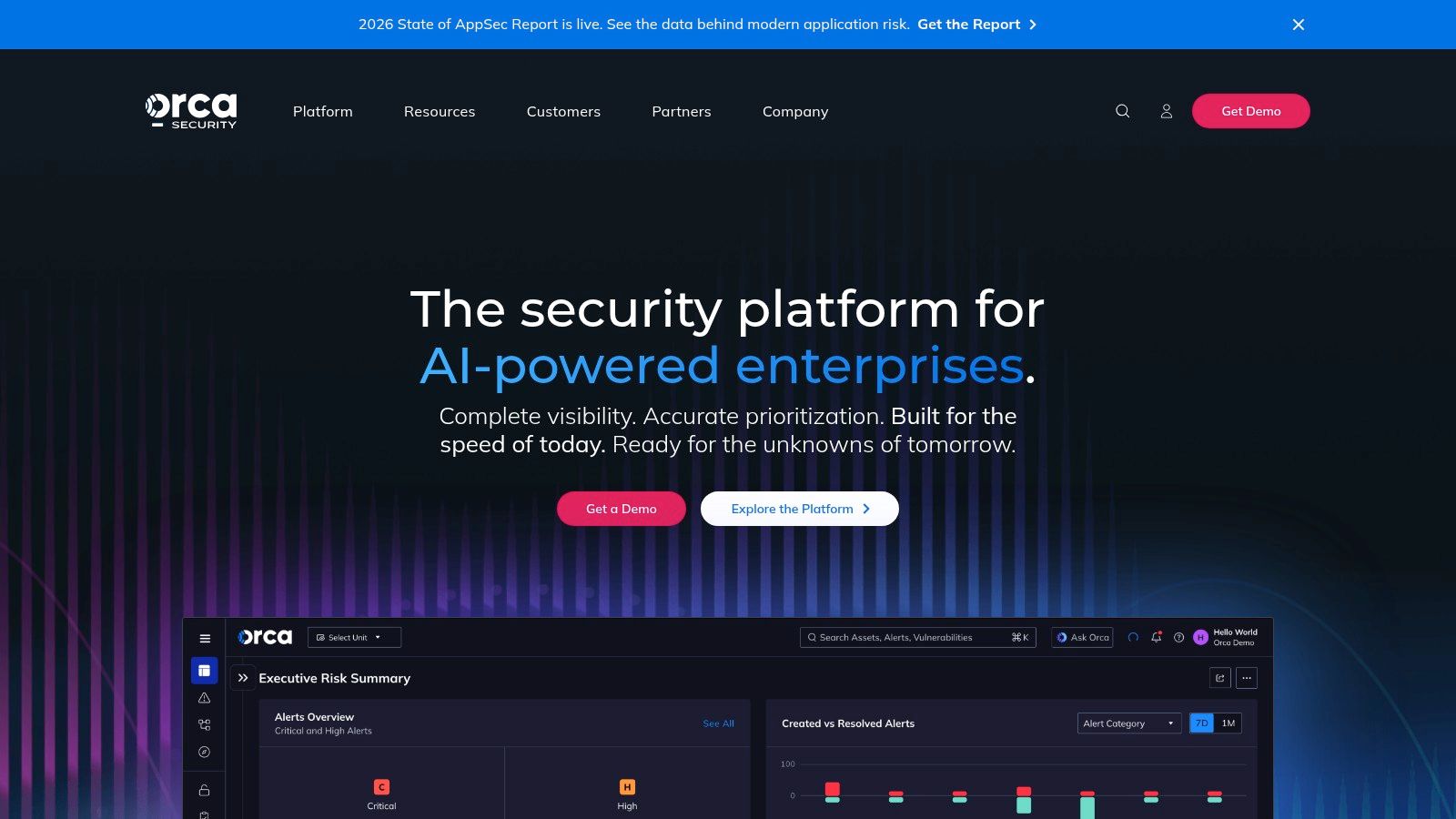
Orca Security It competes in a similarly broad space as Wiz, though the practical appeal is slightly different. Orca often attracts teams that want fast cloud onboarding, a consolidated CNAPP-style model, and a user experience that translates well enough from analyst workflows to executive reporting.
Its agentless side-scanning approach reduces initial friction. That matters when the obstacle is not technical capability but organizational resistance to deploying another runtime component across many cloud accounts and teams.
Operational trade-offs
Orca is a strong fit when the goal is tool consolidation. If your cloud program struggles with too many overlapping controls, too many dashboards, and too many status meetings, a broader platform can cut operational drag. That is often more valuable than extracting slightly different detection behavior from yet another point solution.
The platform also frames risk well in ways leadership can understand. That is not a minor point. Vulnerability scanning tools fail politically when the board sees a large number without business context attached.
Where Orca needs support is outside cloud-heavy estates. If on-prem infrastructure, traditional internal network scanning, or non-cloud application testing still accounts for a large share of your risk, you will need complementary tools. That is normal for CNAPP platforms, but it should be recognized early during procurement.
If your infrastructure resides mostly in cloud accounts, agentless CNAPP can simplify operations quickly. If your environment is evenly divided with legacy internal systems, it will not replace everything.
10. Invicti
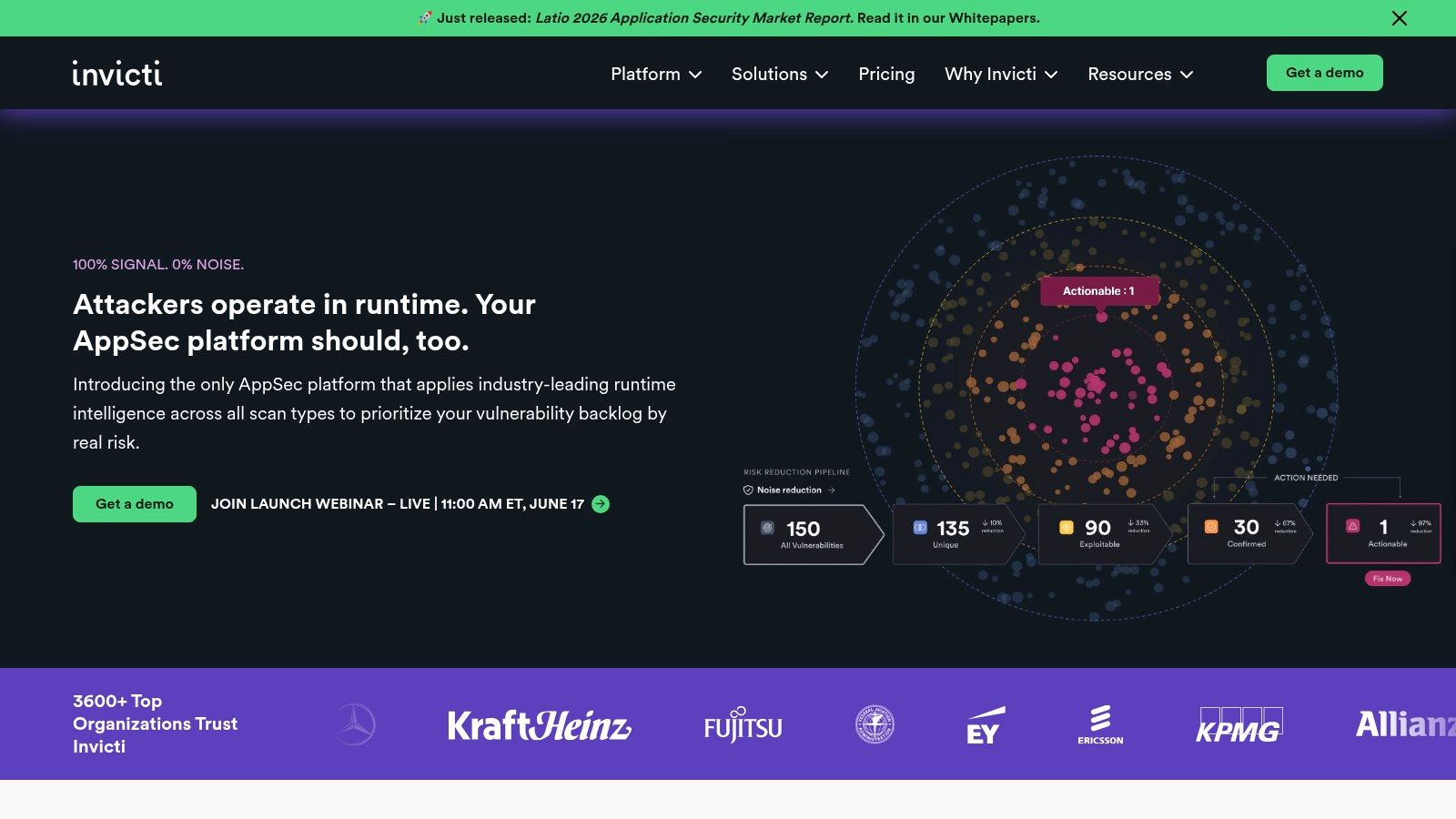
Invicti It earns its place here for a simple reason. Many vulnerability programs still generate solid host findings while web and API risk is managed in a separate AppSec queue with different owners, different tooling, and different priorities. That divide slows remediation and makes it harder to turn exposure data into action across the broader security stack.
Invicti is strongest in environments where customer-facing applications create real business risk and security teams need findings that hold up with developers. Its proof-based DAST approach helps lessen false-positive disputes that stall tickets, and that has operational value well beyond the scan itself. Cleaner findings are easier to send into CI/CD checks, defect trackers, SIEM pipelines, and SOAR playbooks without overwhelming teams with noise.
Integration is an important consideration.
If a scanner sends low-confidence web findings into the same ecosystem that already handles endpoint, cloud, and identity alerts, analysts waste time determining what deserves escalation. Invicti fits better when the goal is to feed validated application-layer issues into a wider response process, not merely create another dashboard for AppSec to maintain.
Where it fits operationally
Invicti makes sense when release velocity is high and security must appear within development workflows rather than after deployment windows close. Teams can use it to test web applications and APIs continuously, then route credible findings into the systems that already manage remediation and incident handling.
It does not substitute for infrastructure vulnerability management, cloud posture assessment, or endpoint exposure tracking. Security teams still require separate coverage for servers, network devices, operating systems, and cloud configuration risk. Invicti is most effective as the application-focused layer within a broader program, particularly when the security team is seeking to correlate app findings with signals already moving through SIEM, XDR, or case management platforms.
- Best for application attack surfaces: Well suited to web apps and APIs where finding quality influences developer response.
- Useful in security orchestration: Findings that are validated are easier to route into CI/CD, ticketing, SIEM, and SOAR workflows.
- Requires companion tools: It improves visibility into applications, yet by itself it cannot address the broader vulnerability management program.
Top 10 Vulnerability Scanners, Feature & Capability Comparison
| Solution | Core Features | UX / Quality | Value / Pricing | 👥 Target Audience | ✨ Unique Selling Points |
|---|---|---|---|---|---|
| 🏆 Unified Security Stack – Vulnerability Management | 50k+ tests, cloud & agent scans, AI correlation, native SIEM/SOAR/XDR | ★★★★★ LLM-assisted triage | 💰 Open‑source; cost‑effective at scale | 👥 Teams needing unified detection, response & compliance | ✨ Native end‑to‑end detection→response, compliance mapping, 30B IOCs |
| Tenable Nessus / Tenable VM | Broad plugin feed, agents, web/app add‑ons | ★★★★☆ Mature & familiar | 💰 SKU‑based; easy trials | 👥 Ops teams needing proven on‑prem + cloud scanning | ✨ Extensive plugin coverage and straightforward operationalization |
| Qualys VMDR | Unified asset inventory, scanning, TruRisk, patch orchestration | ★★★★☆ SaaS scale; heavy workflows | 💰 Quote‑based enterprise pricing | 👥 Compliance‑focused enterprises | ✨ Integrated patch workflows + consolidated evidence |
| Rapid7 InsightVM (Exposure Command) | Agent + agentless scans, remediation projects, threat context | ★★★★☆ Strong remediation UX | 💰 Asset‑based pricing (can scale) | 👥 Teams driving remediation and ITSM ties | ✨ Remediation projects, SLAs & exposure context |
| Microsoft Defender VM (MDVM) | Endpoint‑centric VM, risk prioritization, M365 integration | ★★★★☆ Native MS stack UX | 💰 Per‑user pricing; reduces agent sprawl | 👥 Microsoft‑standardized organizations | ✨ Tight Defender ecosystem & simplified deployment |
| Greenbone / OpenVAS | OpenVAS core, cloud service, appliances, daily feeds | ★★★☆☆ Utilitarian UI | 💰 Per‑IP/subscription; budget‑friendly | 👥 Cost‑sensitive orgs; EU data residency needs | ✨ Open‑source lineage with EU hosting options |
| CrowdStrike Falcon Spotlight VM | Scanless endpoint assessments via Falcon agent, threat enrichment | ★★★★☆ Unified Falcon console | 💰 Best value if Falcon already deployed | 👥 Organizations standardized on Falcon | ✨ Real‑time intel + scanless endpoint coverage |
| Wiz (CNAPP) | Agentless cloud API scans, attack‑path prioritization, SBOM | ★★★★☆ Fast cloud onboarding | 💰 Quote‑based enterprise | 👥 Cloud‑native teams (multi‑cloud) | ✨ CNAPP graph linking vuln→identity→exposure |
| Orca Security | Agentless side‑scanning, CSPM/CWPP/CIEM consolidation | ★★★★☆ User‑friendly exec reporting | 💰 Quote‑based; consolidation ROI | 👥 Multi‑cloud orgs seeking rapid coverage | ✨ Rapid agentless onboarding; consolidated CNAPP features |
| Invicti (DAST / AppSec) | Proof‑based DAST, API testing, SAST/SCA options | ★★★★☆ High signal‑to‑noise for apps | 💰 Quote‑based (premium for full suite) | 👥 AppSec teams & developers | ✨ Exploit validation + developer‑friendly remediation workflows |
Final Thoughts
On Monday morning, the scan completes as planned, and that is when the real work begins. Findings require owners, priority levels, context, tickets, exceptions, and evidence of resolution. Organizations that see vulnerability scanning as a purchasing task typically gain another console while their remediation backlog stays unchanged.
The tools listed here address different aspects of that challenge. Some focus on wide host and network coverage. Some perform best within an endpoint platform. Others are plainly built for cloud environments or application security. The real choice is not so much about who can find CVEs but about where the results go afterward. When vulnerability data fails to reach the SIEM, SOAR, XDR, and ITSM processes your team already relies on, response times increase and ownership becomes unclear.
Program quality still depends on asset visibility. Authenticated scans, agent telemetry, cloud API collection, external attack surface data, and application testing each address different gaps. Depending on a single method generally creates blind spots, particularly where cloud assets are short-lived, systems are contractor-managed, and development pipelines release faster than infrastructure teams can review manually.
Prioritization is equally important. A lengthy inventory of findings does not amount to a risk program. Effective platforms incorporate exploit context, business ownership, exposure paths, active telemetry, and remediation workflow, enabling analysts to distinguish urgent tasks from routine noise. This is why platform fit frequently outweighs the number of features.
Tool selection should reflect operational reality.
Tenable, Qualys, and Rapid7 continue to be solid options for organizations requiring established scanning programs across conventional infrastructure and deep assessment coverage. Microsoft Defender Vulnerability Management and CrowdStrike Falcon Exposure Management are more suitable when endpoint security already operates within those ecosystems and reducing agent sprawl is a priority. Wiz and Orca fit better with cloud-first settings where API visibility, identity context, and attack path analysis carry more weight than traditional network scan approaches. Invicti should be considered when web apps and APIs account for a significant portion of risk, since infrastructure findings by themselves cannot clarify application exposure.
Unified Security Stack applies to teams working to narrow the distance between discovery and action. Its benefit is not merely finding issues. It places vulnerability data into the same operational context as SIEM, SOAR, XDR, and compliance workflows, which can cut down on switching between tools and make response progress easier to follow across security and IT teams.
My guidance is simple. Purchase based on operational fit. Align the tool with your asset profile, the systems where remediation choices are already made, and the maturity of the team that will operate it. If a product cannot reduce triage friction, bolster ownership, and show evidence of closure, its feature list will not rescue the deployment.
If your team is tired of collecting vulnerability findings without a clean path to response, Unified Security Stack merits serious consideration. It unites vulnerability management with SIEM, SOAR, XDR, and compliance workflows so you can progress from detection to action in one location, instead of running another isolated scanner console.