SIEM versus Antivirus: What Sets Them Apart?
Your antivirus shields your workstation against malware, but how can you safeguard your business from Advanced Persistent Threats?
Understanding Advanced Persistent Threats (APTs)
represent a major cybersecurity risk for businesses. They consist of stealthy, persistent hacking efforts that are extremely advanced and able to evade standard security defenses, resulting in ransomware or data breaches.
To defend against APTs, organizations require a multi-layered security strategy. This involves deploying systems that manage security information and events (known as SIEM), staying current with threat intelligence, and maintaining compliance controls.
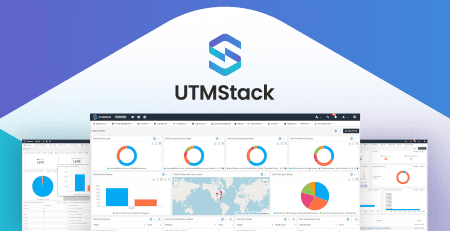
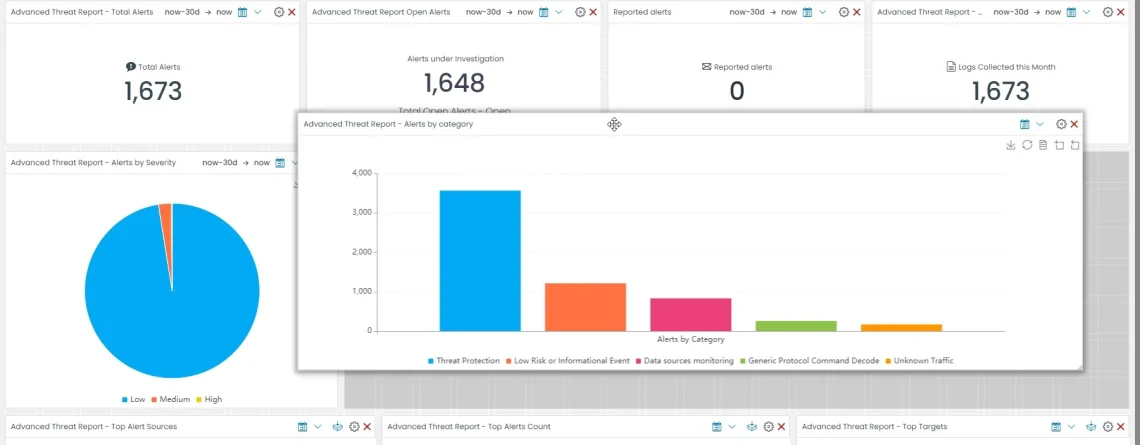
Unified Security Stack delivers these solutions by continuously monitoring billions of threat intelligence data nodes and correlating them with your data in real time, achieving top-tier threat detection and response through an intuitive interface. Artificial Intelligence integrations can oversee this process to enhance accuracy and enable continuous learning.
Overview
What Sets This Apart from Antivirus, Firewall, or XDR?
Unified Security Stack distinguishes itself in threat prevention by combining SIEM and XDR technologies into one unified platform, exceeding the limits of conventional systems. Our distinctive approach enables real-time correlation of log data, threat intelligence, and malware signatures from various sources. This makes it possible to identify and stop complex threats that employ stealthy techniques and patterns.
For instance, if our software platform detects a link between an internal server and a blacklisted IP address in a firewall log, it can rapidly examine log data to determine which server started the connection. By performing a disinfection and incident response procedure on that server, our system can quickly stop the threat at its origin, even when the threat was not directly found on the server itself. This seamless combination of SIEM and XDR capabilities distinguishes Unified Security Stack from rivals, giving organizations an effective, comprehensive cybersecurity suite that improves threat detection, response, and remediation across clients’ valuable digital infrastructure.
Start your own round-the-clock Security Operations Center driven by Artificial Intelligence Integrations.
A further benefit is our AI Integration for alert investigations. It simplifies cybersecurity operations by automating alert investigation and classification, lowering the workload for security analysts. This produces an agile, efficient security center that reduces costs by using on-call security engineers rather than round-the-clock monitoring. The AI-driven Integration solution also improves accuracy, accelerates response times, reduces the impact of security breaches, and offers scalability to manage growing alert volumes and global threats. Unified Security Stack is a comprehensive cybersecurity solution that strengthens threat detection, response, and remediation across clients’ digital infrastructure.
The Integration is easy to set up and relies on OpenAI API keys. Unified Security Stack is actively developing integrations for additional Large Language model providers, including VertexAI and Llama2 OSS models.
HIPAA, GLBA, PCI, SOC2 and GDPR Compliance
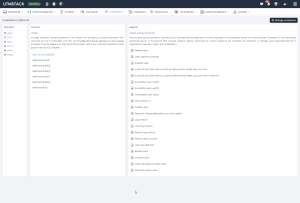
In today’s digital age, adherence to regulatory requirements such as HIPAA, GLBA, CMMC, and PCI is essential. This calls for strong log management solutions so businesses can protect sensitive data and privacy. Unified Security Stack provides a comprehensive solution that supports compliance by managing log data, which is vital for regulatory audits and investigations. It helps satisfy regulatory requirements, aids forensic investigations, threat detection, incident response, and risk management. Unified Security Stack’s solution centralizes log collection and storage, supports real-time monitoring and analysis, and guarantees secure retention and archiving. It also streamlines compliance reporting and works with various regulatory frameworks, making log management essential to regulatory compliance.
What level of security does the service offer?
Isolation: Each instance of Unified Security Stack receives a dedicated Virtual Machine. Every VM is safeguarded by two firewalls for extra separation from the internet and other tenants.
Protection layers: the application is protected by a WAF and DDoS protection provided by the hosting provider OVH USA. You can find more details about their ISO, SOC 2, HIPAA, PCI DSS, CSA STAR, and compliance certifications here.
Data Encryption: All data at rest and in transit is encrypted using ZFS native encryption and is readable only by authenticated users and the application’s services.
Server Access: Server keys are kept in a KeyVault and can be accessed only by the Cloud Operations Engineering team for support and maintenance purposes. KeyVault access is limited by VPN and Biometric Authentication.
Here is everything you can accomplish with Unified Security Stack:
- Log Management and correlation
- Threat Detection and Response
- SOC AI-Powered Analysis
- Security Compliance
- Threat Intelligence
Here is an online demo: synoti.com/demo