10 Best Dark Web Monitoring Solutions for 2026
Your VPN credentials may appear on sale before your help desk detects an issue. That is why best dark web monitoring has become a security operations priority rather than an optional extra, particularly since leaked identities, session data, and internal documents travel quickly through underground channels. Market data supports this reality, with dark web intelligence valued at $520.3 million in 2023 and projected to reach $1.3 billion by 2028 with a 22.3% CAGR according to the market figures cited here. For CISOs, MSSPs, and compliance teams, the key question is no longer whether to monitor, but which platform converts underground sightings into rapid, defensible action.
If you are already managing SIEM noise, XDR alerts, and SOAR playbooks, dark web monitoring should integrate into that same operational chain. An effective platform goes beyond flagging breached email addresses; it links exposure to actual assets, verifies if the identity is active in your environment, and facilitates movement from alert to containment without waiting for analyst intervention. This is critical in regulated settings, where evidence of exposure supports governance efforts related to HIPAA, GDPR, FERPA, PCI DSS, SOC 2, and ISO 27001 as documented in this compliance-oriented overview.
Table of Contents
- Dark Web Monitoring Services by Unified Security Stack
- 2. ZeroFox
- 3. Recorded Future
- 4. Flashpoint
- 5. ReliaQuest GreyMatter DRP paired with Digital Shadows SearchLight
- 6. Rapid7 Threat Command
- 7. Intel 471
- 9. SpyCloud
- 9. SpyCloud
- 10. Flare
- Top 10 Dark Web Monitoring Services Comparison
- Operationalizing Intelligence Your Next Steps
Dark Web Monitoring Services by Unified Security Stack
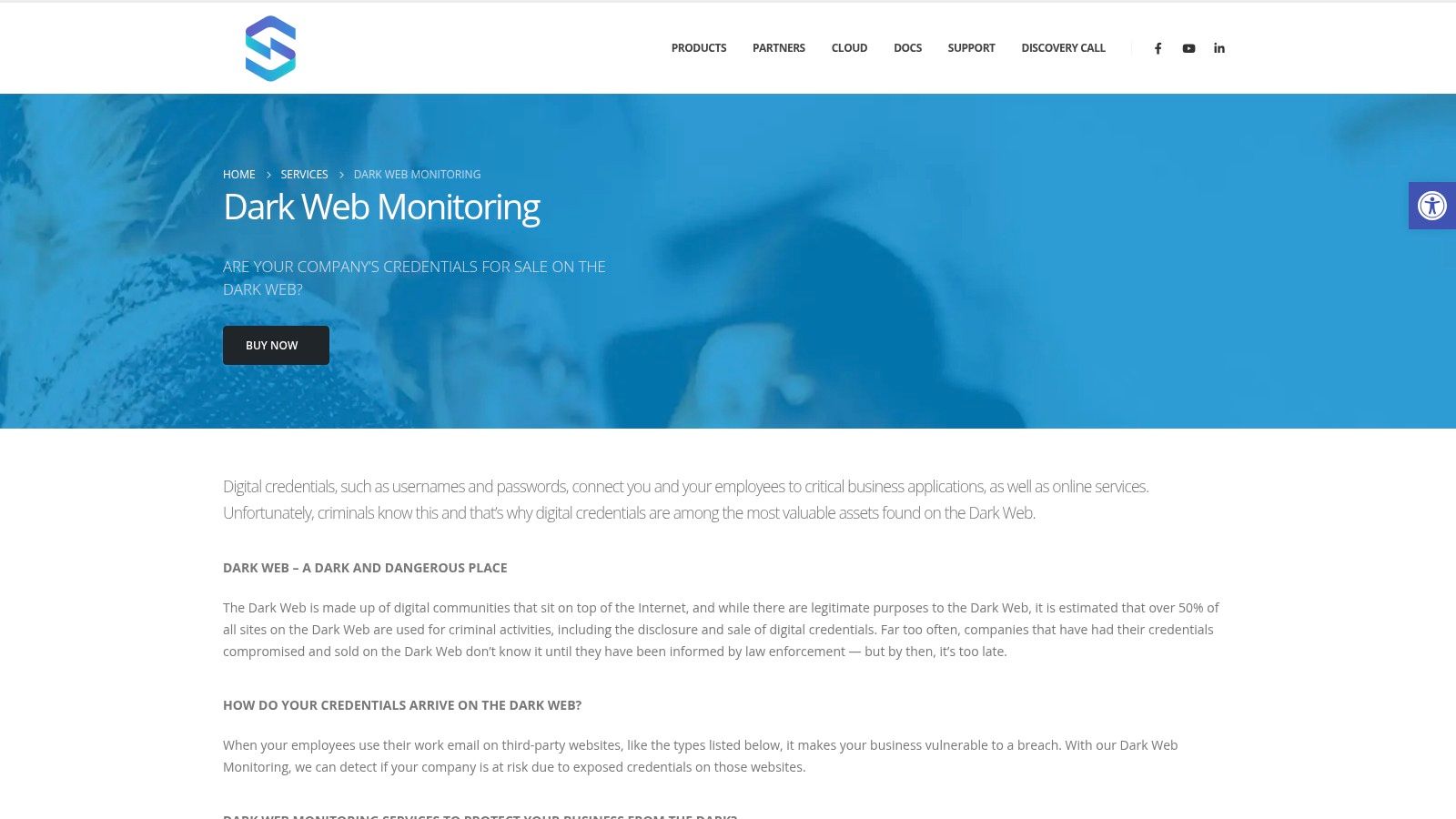
A leaked credential is seldom the entire incident. The superior approach is correlating exposure with endpoint activity, user logins, and network telemetry, making Unified Security Stack a strong option when the objective is correlation and response instead of mere alert aggregation. Its dark web monitoring service resides within an open-source SIEM, SOAR, and XDR stack, allowing stolen IPs, exposed files, or compromised accounts to be evaluated against current internal activities. This context alters workflows, enabling SOC teams to distinguish noise from incidents requiring action.
Why it stands out for practitioners
The platform's 30+ billion IOC enrichment layers and LLM-assisted triage help minimize time spent on low-value alerts. The practical advantage lies in the response phase. Teams can link detections to predefined or custom playbooks that rotate credentials, isolate endpoints, or block malicious infrastructure, providing the workflow SOCs need when external exposure becomes an internal threat.
Practical rule: If a dark web alert cannot be linked to an internal user, endpoint, or network event, it generally indicates a visibility issue rather than a response failure.
That operational model also fits compliance-heavy programs, since the same detections and actions can be mapped into audit evidence for SOC 2, HIPAA, GDPR, PCI, and ISO 27001. The open-source, modular architecture prevents purchasing a point solution that creates silos, allowing the rest of the stack to handle complex tasks. The trade-off is clear: no dark web service captures everything, and automated remediation relies on permissions, tuning, and human oversight. For teams using SIEM and SOAR workflows, this represents a viable balance.
For teams comparing vendors, it also helps to frame Unified Security Stack against other dark web monitoring tools regarding integration depth, not merely detection coverage. Tools that do not feed cleanly into existing response paths often generate more manual work than they eliminate.
Pros
- Deep integration with SIEM, SOAR, and XDR, sightings are correlated with logs, endpoints, and network telemetry to provide contextualized alerts and accelerate response.
- Automated containment via playbooks, built-in or custom actions are available to rotate credentials, isolate endpoints, and block malicious IPs.
- Large IOC and LLM enrichment, the platform leverages a vast IOC corpus and LLM-assisted triage to prioritize high-risk exposures.
- Compliance-ready evidence, detection and response actions align clearly with major frameworks.
- Open-source, extensible platform, this modular architecture accommodates APIs, agents, NetFlow, and Syslog.
Cons
- No dark web platform sees everything, certain marketplaces and private channels remain inaccessible.
- Automated actions need careful tuning, human review remains essential before triggering large-scale remediation.
Website: Unified Security Stack Dark Web Monitoring Services
2. ZeroFox
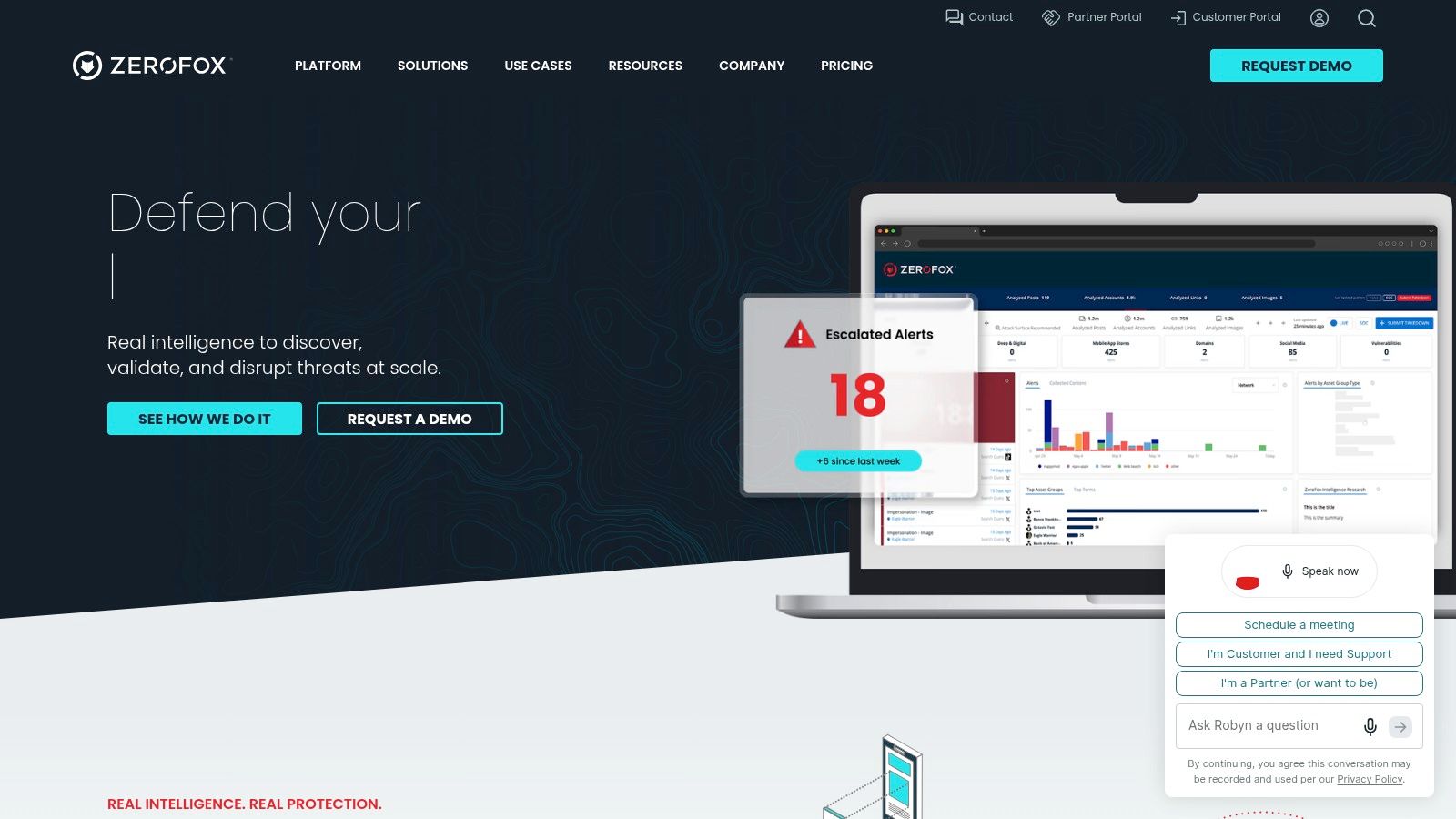
ZeroFox fits best when dark web monitoring sits inside a broader digital risk protection program, not as a limited credential search. It tracks criminal forums, marketplaces, Telegram, and encrypted chat platforms, offering value through channel breadth as well as Tor coverage. For brand-centric organizations, this broader perspective can identify impersonation before it escalates into a customer-facing incident.
Where it fits best
The analyst-reviewed model and human-operated “Dark Ops” approach are significant for teams seeking more than automated scraping. ZeroFox supports takedowns and broader response workflows, aiding scenarios involving brand abuse, impersonation, or executive risk, beyond just account compromise. The trade-off is evident: the platform targets enterprise use, meaning smaller teams may pay for features they do not fully utilize.
ZeroFox performs best when dark web intelligence, social channels, and brand protection must be managed collectively.
This broader scope also influences deployment. If the primary need is credential monitoring and rapid containment, the platform may feel heavier than a point solution. If the security team already handles impersonation, executive protection, and external risk response in a single queue, the additional coverage justifies the operational overhead.
Recorded Future operates in a distinct segment of the market. It serves teams with mature threat intelligence functions who wish to integrate dark web collection into a broader intelligence fabric and push findings into existing response workflows. In this context, raw visibility is less important than the ability to correlate, prioritize, and act on findings without increasing analyst workload.
For teams evaluating operational feeds, the critical question is how intelligence enters the SOC. Platforms that normalize into SIEM, SOAR, or XDR workflows typically reduce manual triage. If you are assessing this path alongside other feeds, Unified Security Stack's threat intelligence feed serves as a useful benchmark for linking collection efforts to response actions, rather than treating them as isolated dashboards.
Pros
- Broad channel coverage, covering the dark web, surface web, and social media channels.
- Human-in-the-loop collection, gaining covert access to private communities helps minimize visibility gaps.
- Integrated takedown workflows, helpful in situations involving brand abuse and impersonation.
- Analyst validation, assists in filtering out the noise generated by pure automation.
Cons
- Pricing is not public, purchasing is typically led by enterprise buyers.
- May be too broad for simple credential monitoring, particularly when a point solution is the goal.
Website: ZeroFox
3. Recorded Future
Recorded Future suits organizations with mature threat intelligence programs that require dark web data integrated into a broader intelligence framework. Its Intelligence Graph integrates open, technical, and dark web sources, while the Insikt Group delivers finished intelligence that is more actionable than raw collection. This distinction is critical in SOC and CTI workflows, where the primary cost lies not in the alert itself, but in the analyst time required for interpretation and decision-making.
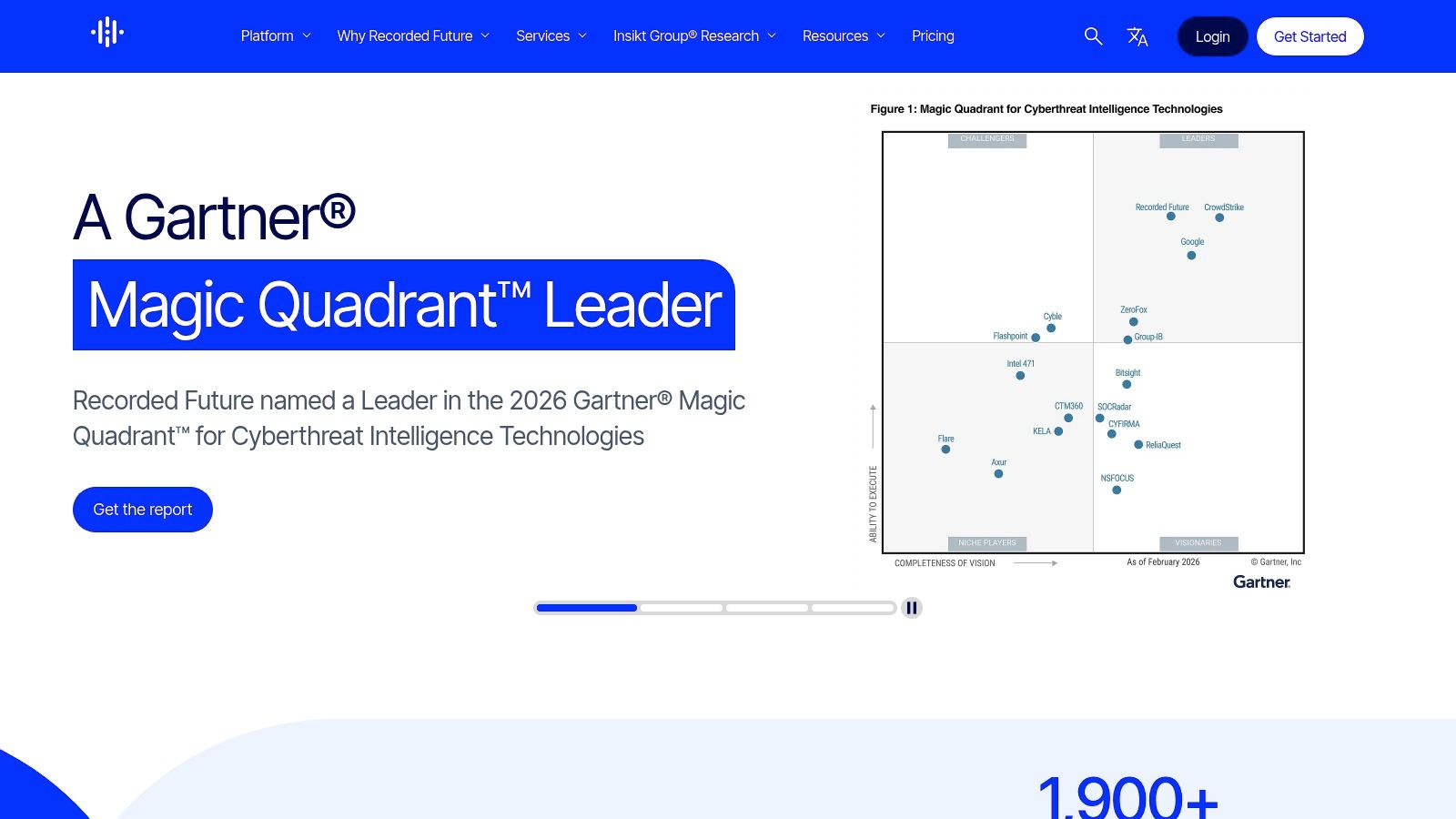
The practical benefit lies in source depth. Recorded Future gathers data from Tor sites, IRC channels, forums, and marketplaces, enabling teams to track actors, link campaigns, and correlate entities rather than merely reviewing lists of exposed usernames. This breadth aids in validating leak authenticity, attributing it to known actors, and determining its flow into the SOC. The trade-off is inherent: enterprise-grade depth introduces a learning curve, and smaller teams may lack the personnel to leverage all features effectively.
Packaging is more structured than with many competitors, offering dark web monitoring within specific tiers and providing 24/7/365 support options. This facilitates procurement but maintains an enterprise-level entry point. Mature security teams may tolerate this cost if they can integrate outputs into existing reporting and response workflows. Leaner teams often find the platform exceeds their daily monitoring requirements.
The operational challenge is not merely coverage, but ensuring intelligence reaches the tools analysts already use. Recorded Future performs best when findings are integrated into SIEM, SOAR, or XDR workflows and managed by a team capable of consistent action.
Pros
- Deep source coverage, valuable for CTI and SOC teams requiring context.
- Strong analyst research, finished intelligence cuts down on triage time.
- Mature integrations, well suited to reporting and operational workflows.
- Tiered packaging, makes it simpler to align capabilities with procurement.
Cons
- Enterprise pricing, frequently beyond the reach of smaller teams.
- Steeper learning curve, its value hinges on analyst maturity.
Website: Recorded Future
4. Flashpoint
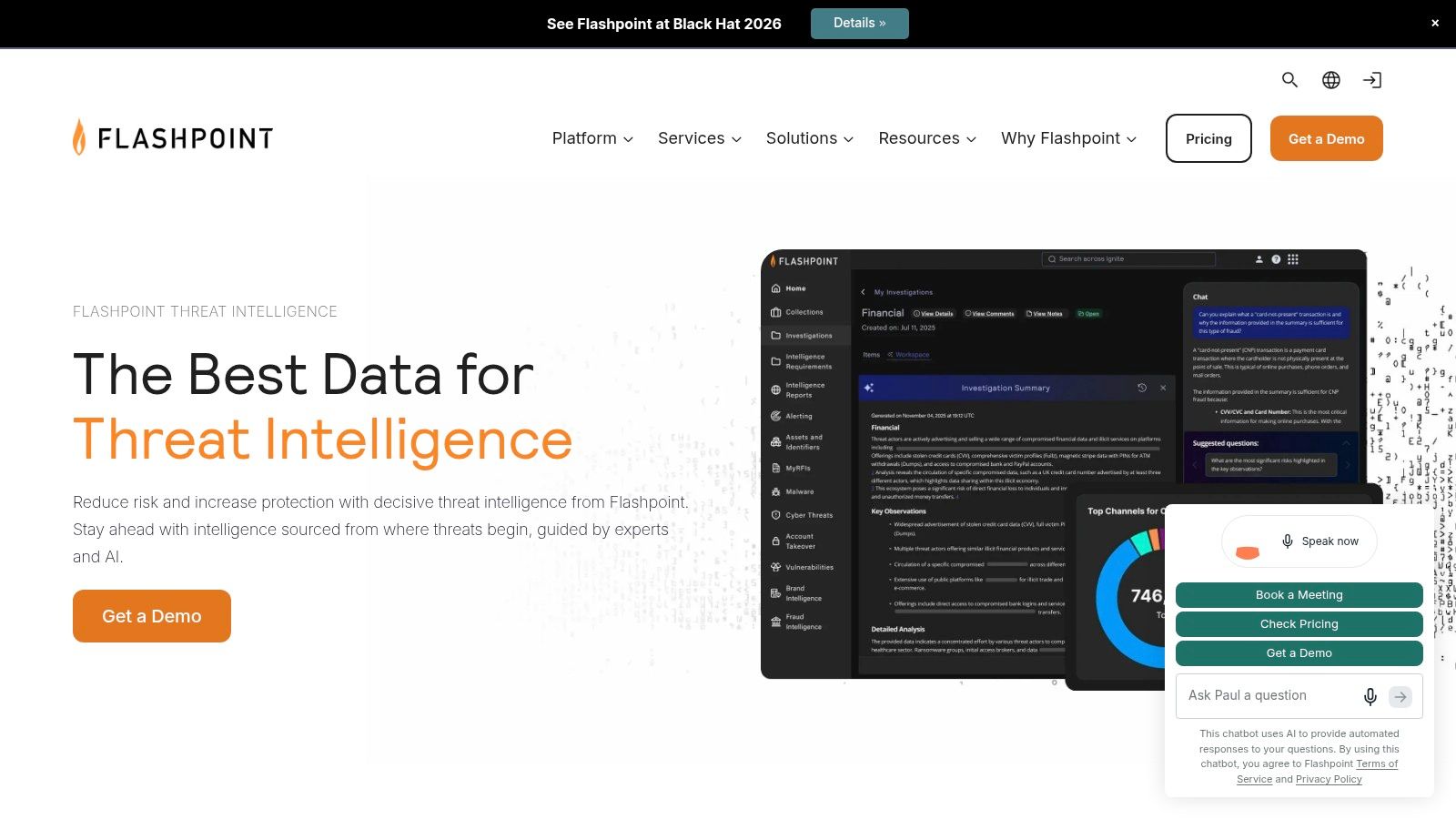
Flashpoint fits teams that need dark web monitoring to sit inside a wider fraud, identity, vulnerability, and brand risk program. Its monitoring operates within a broader intelligence platform featuring finished reporting and managed attribution, providing investigators with greater context when validating leaks or tracking actors. For organizations facing multiple risk types, this comprehensive scope can minimize tool sprawl and offer analysts a unified workspace.
Why teams buy it
Flashpoint's access to forums, markets, and encrypted channels is only one aspect of its appeal. The platform's modular structure allows buyers to align spending with specific use cases, avoiding immediate commitment to the full stack. This flexibility benefits teams seeking vulnerability intelligence feeds or fraud-focused workflows alongside dark web monitoring. Publicly visible marketplace pricing in certain instances provides procurement teams with a baseline for internal discussions.
Operational insight: broad CTI platforms function effectively only when a single team owns the workflow from alert intake to case closure. Without clear ownership, intelligence is stored and reviewed but rarely acted upon.
The trade-off involves scope and cost. As teams expand their Flashpoint usage, they approach a full intelligence program rather than a narrow monitoring tool. Mature security teams may accept this if they can route findings into SIEM, SOAR, or case management systems for investigations, fraud response, and threat hunting. Smaller teams may find the platform exceeds their daily needs, particularly if they require only quick exposure alerts linked to remediation.
Pros
- Broad intelligence coverage, applicable across cyber, fraud, and identity risk.
- Module flexibility, enables teams to purchase only the components they require.
- Managed attribution, assists with investigations and actor tracking.
- Marketplace visibility, certain bundle pricing is simpler to assess.
Cons
- Premium pricing, comprehensive CTI scope may be costly.
- May exceed the needs of point-solution buyers.
Website: Flashpoint
5. ReliaQuest GreyMatter DRP paired with Digital Shadows SearchLight
ReliaQuest's GreyMatter DRP, which incorporates Digital Shadows SearchLight, fits teams that need dark web monitoring to sit inside a broader SecOps workflow. It prioritizes credential exposure, brand abuse, and executive or VIP protection, serving security groups that address both technical incidents and reputation issues. This focus is crucial in environments where alerts must reach the correct analyst, case owner, or responder with minimal manual triage.
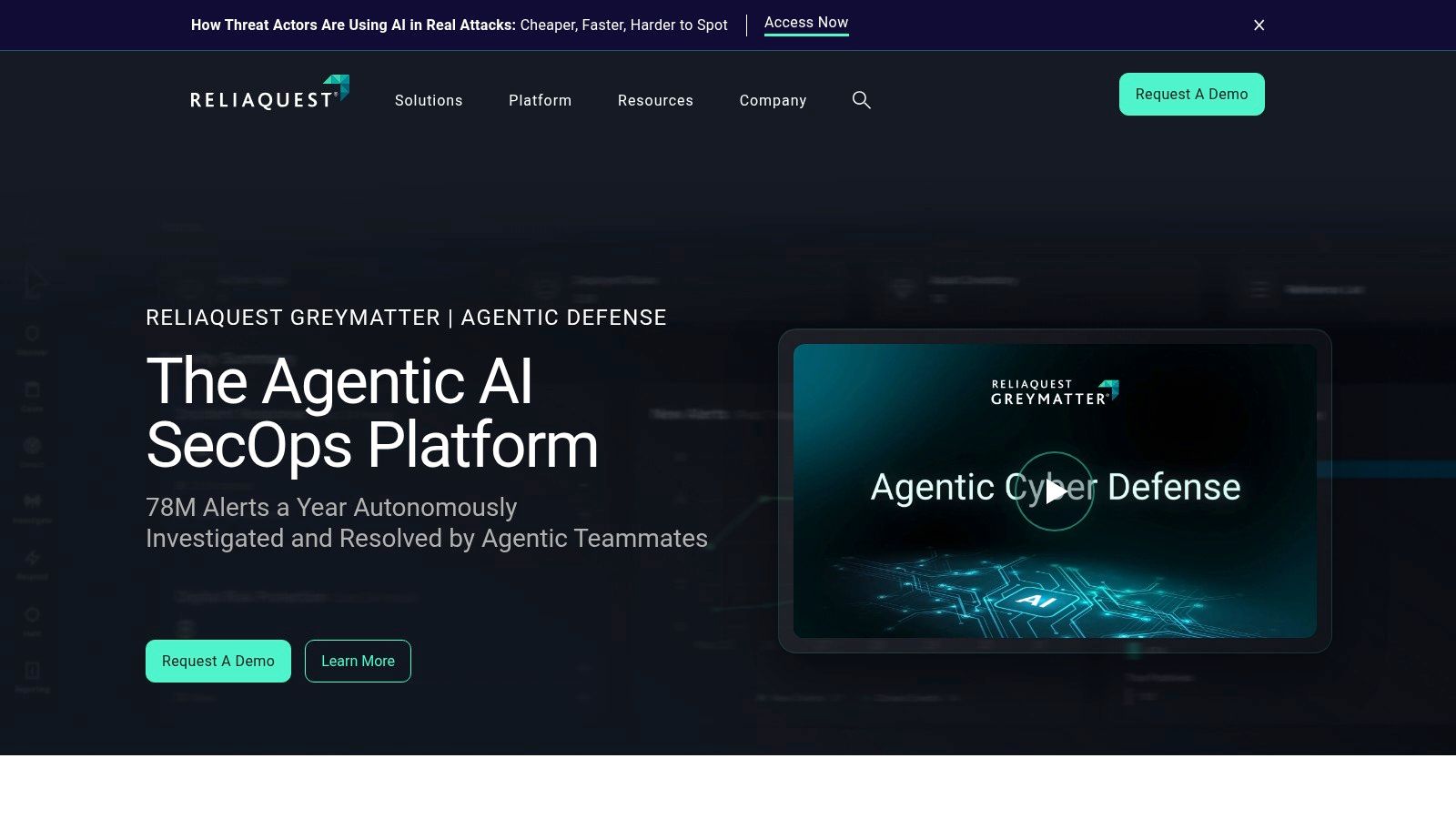
The credential monitoring side is backed by a database noted at 15B+ breached credentials in the market data already cited above. This scale enables continuous monitoring, which proves more valuable than sporadic checks when both internal identities and corporate branding require coverage. The product also integrates with SIEM, SOAR, and case management systems, ensuring findings flow into the tools analysts already utilize.
The main advantage is consolidation. Instead of keeping a separate dark web feed and a distinct response process, teams can route exposure information into their current operating model, preserving a clear handoff path. Breadth is the trade-off. For teams that only need a narrow credential monitor with straightforward remediation steps, the platform can seem too complex for the job.
Pros
- Strong brand protection and credential focus.
- Integrated SecOps delivery, simplifies routing into existing workflows.
- SIEM and SOAR support, valuable for managed operations.
- Response and takedown options, useful in impersonation scenarios.
Cons
- Pricing is not public.
- May be broader than some teams want.
Website: ReliaQuest
6. Rapid7 Threat Command
Rapid7 Threat Command aligns with teams already utilizing Rapid7 for detection, response, or exposure management. The key advantage is operational consistency. Exposure findings can transition into MDR, asset visibility, or incident handling without requiring analysts to construct separate workflows. In environments standardized on Rapid7 tools, this reduces handoff friction and simplifies response governance.
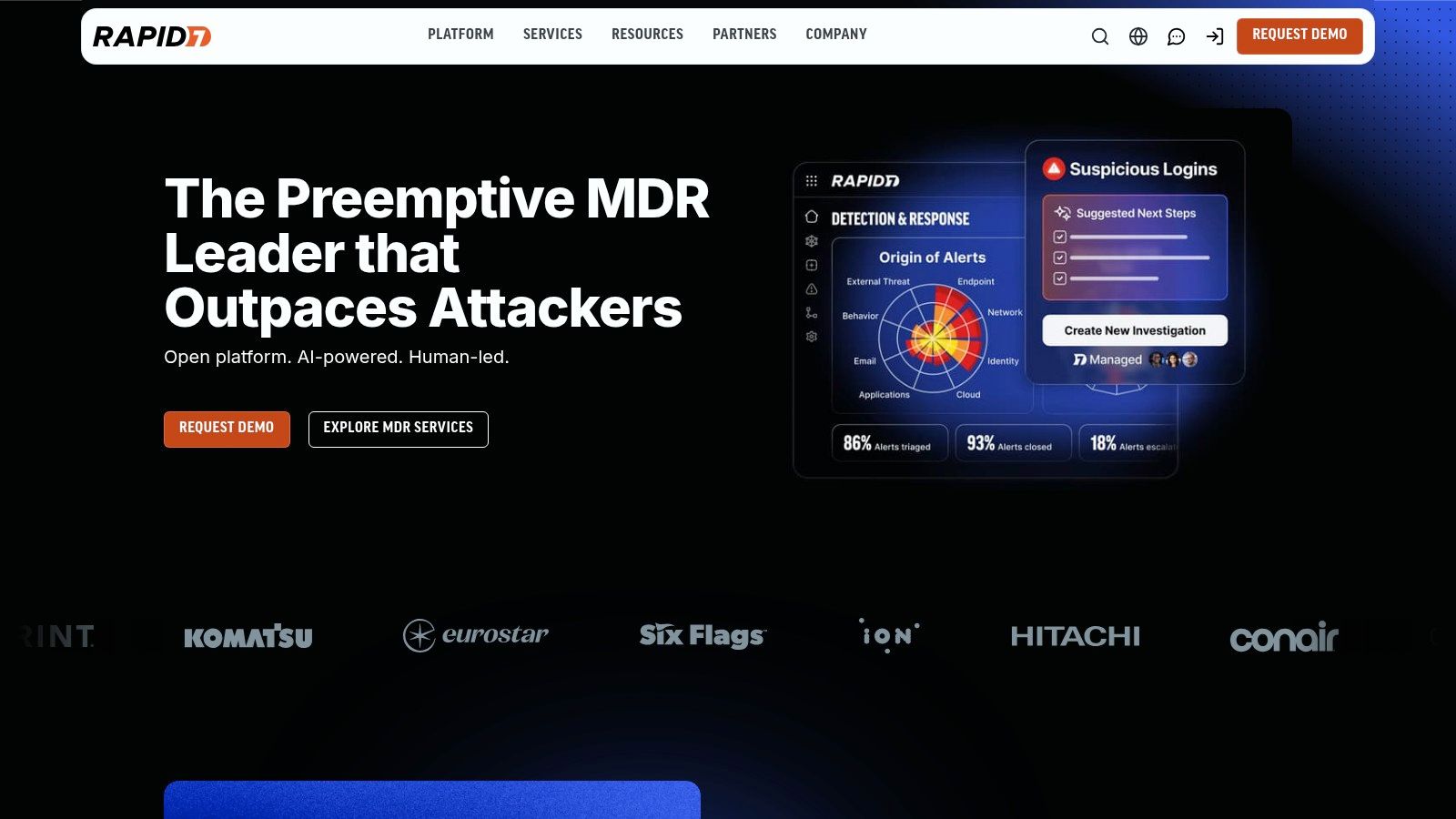
The platform monitors clear, deep, and dark web channels, as well as code-sharing sites, file-sharing sites, and private forums. This extensive collection benefits scenarios where credential exposure is only one component of the problem, alongside brand impersonation or threat chatter. It also provides some remediation and takedown support, although the extent varies by issue.
Operational fit drives the primary purchasing decision. Teams accustomed to Rapid7 dashboards can typically adopt Threat Command more quickly than a standalone CTI stack, which is vital when monitoring must feed an existing operating model. Teams lacking this infrastructure may find the purchase excessive if their need is limited to focused monitoring.
Pros
- Good fit for existing Rapid7 customers.
- Broad channel monitoring, such as code-sharing and private forums.
- Clear vendor support model, simpler for operational teams to adopt.
- Ties into MDR and exposure workflows.
Cons
- Some remediation limits are documented.
- Pricing is quote-based.
Website: Rapid7
7. Intel 471
Intel 471 fits organizations that need actor-centric investigation and prioritize identifying the actors behind activity, not just the content posted. The platform accesses cybercrime ecosystems, including covert sources, forums, markets, and messaging apps. This capability is valuable when connecting credential theft, ransomware activity, and infostealer-driven abuse into a single investigative narrative.
What matters operationally
The value is evident in signal quality. Compromised credential intelligence, infostealer logs, and finished reporting provide analysts with material suitable for executive updates, board reporting, and incident response context. However, the platform is not designed as a lightweight dashboard for casual review. It performs optimally in organizations with mature CTI processes capable of transforming raw findings into follow-up actions.
A practical comparison is useful here. Teams aiming to operationalize dark web intelligence within existing workflows may need to map Intel 471 output into SIEM, SOAR, or XDR processes, rather than expecting the platform to handle this integration automatically. For organizations exploring broader monitoring programs, a guide like dark web monitoring for businesses can help define how intelligence integrates into daily operations rather than remaining in a separate queue.
If your team seeks insights rather than just alerts, Intel 471 should be on the shortlist.
The trade-off is distinct. As a premium enterprise product, the return on investment depends on analysts' ability to transition from findings to containment, investigation, or reporting without delay. For organizations with established incident response rigor and active threat actor tracking requirements, this represents a reasonable exchange.
Pros
- Strong threat actor coverage.
- Good fit for ransomware and fraud investigations.
- Finished intelligence works well for leadership reporting.
- Useful visibility into covert criminal activity.
Cons
- Premium pricing.
- Requires CTI maturity to realize full value.
Website: Intel 471
9. SpyCloud
SpyCloud fits teams that are trying to stop account takeover ...before it escalates into fraud, support abuse, or lateral movement. Its value derives from recaptured breach data, stealer logs, and session data, providing security and fraud analysts with direct visibility into exposed identities. While this scope is narrower than full-spectrum threat intelligence, it remains practical and easy to operationalize for identity exposure.
Why identity teams buy it
API-first delivery is significant because it integrates seamlessly into SOC, IAM, and fraud workflows without extensive custom development. Security teams can route exposure data into password resets, session invalidation, or case creation, making the platform actionable for response rather than just awareness. This is crucial for organizations that need dark web monitoring for businesses to inform daily operations rather than waiting in a separate queue, as detailed in this guide.
SpyCloud is also a strong choice when the team requires rapid time to value. If the primary objective is credential exposure detection and identity protection, the platform performs effectively. However, if requirements include brand monitoring, social chatter, or broader threat actor context, the fit becomes constrained and the trade-offs are evident. The platform prioritizes identity exposure, and this focus drives its utility.
Pros
- Best-in-class for credential and identity exposure.
- Practical integrations, particularly in IAM and fraud workflows.
- Useful early-warning data, covering cookies and sessions.
- Fast time to value.
Cons
- Less coverage than full CTI platforms.
- Pricing is typically quote-based.
9. SpyCloud
SpyCloud fits organizations that need account takeover prevention beyond broad dark web coverage. Value stems from recaptured breach data, stealer logs, and session data, offering security and fraud teams a practical method to identify compromised identities before they result in fraud or access abuse. Although the scope is narrower than full-spectrum CTI, this focused approach is often simpler to manage daily for identity exposure workflows.
Why identity teams choose it
API-first delivery provides the primary operational benefit. It enables SOC, IAM, and fraud teams to seamlessly integrate exposure data into password resets, session invalidation, and abuse handling without significant custom scripting. This is vital for teams that require dark web monitoring to trigger response actions instead of remaining in a separate alert queue. For organizations aiming to integrate dark web monitoring for businesses into daily operations, this practical handoff ensures the data remains actionable, as described in this guide.
SpyCloud is also suitable when time to value outweighs breadth. If the immediate objective is credential exposure detection and identity protection, the platform executes this task effectively. Conversely, if requirements encompass brand monitoring, social chatter, or broader threat actor context, the fit tightens and the trade-offs become more apparent. Designed primarily for identity exposure, this focus explains its widespread adoption.
Pros
- Best-in-class for credential and identity exposure.
- Practical integrations, particularly in IAM and fraud workflows.
- Useful early-warning data, covering cookies and sessions.
- Fast time to value.
Cons
- Less coverage than full CTI platforms.
- Pricing is typically quote-based.
Website: SpyCloud
10. Flare
Flare is among the most straightforward platforms in this category to implement quickly. Its focus is identity-first threat intelligence, so it monitors dark web forums, marketplaces, Telegram, paste sites, and code repositories, emphasizing credentials, stealer logs, leaked secrets, and lookalike domains. This appeals to teams seeking rapid setup without compromising coverage quality.
Why teams adopt it quickly
The identifier-based licensing model is practical because scaling is based on specific domains or keywords. This aligns well with organizations wanting to monitor company domains, executive names, or product terms without purchasing a full intelligence suite. It also integrates with SOC workflows, ensuring alerts are not confined within the product.
Flare is additionally useful because it avoids the complexity that renders some enterprise platforms unused. The trade-off is that it is not a comprehensive social media brand protection system; if your exposure issues involve impersonation across all public channels, a broader stack may still be necessary.
Pros
- Fast setup, simpler to deploy than many enterprise CTI tools.
- Strong focus on credentials and leaked data.
- Identifier-based scaling, valuable for expanding programs.
- Good fit for SOC alerting workflows.
Cons
- Not a full brand protection suite.
- Pricing is typically quote-based.
Website: Flare
Top 10 Dark Web Monitoring Services Comparison
| Product | Core coverage & integration | Detection & enrichment | Automated response & SOAR | Best for | Pricing & notes |
|---|---|---|---|---|---|
| Unified Security Stack Dark Web Monitoring Services | Marketplaces, forums, paste sites, credential dumps; native integration with SIEM, SOAR, XDR, vuln scanning, endpoint telemetry | 30B+ IOC corpus, LLM-assisted triage, contextualized correlation with internal logs | Prebuilt/custom playbooks (rotate/revoke creds, isolate endpoints, block IPs); evidence mapped to compliance frameworks | Security teams wanting a unified open-source SIEM+SOAR+XDR with DWM and audit-ready reporting | Open-source modular stack; cost-effective vs proprietary; automation requires proper tuning |
| ZeroFox | Surface/deep/dark web, social channels, Telegram; DRP platform integrations | Analyst-validated intelligence plus HUMINT operator access | Alerting, response workflows and takedown support | Enterprises needing broad channel coverage and takedown capabilities | Enterprise pricing; quote-based |
| Recorded Future | Open, technical and dark web via Intelligence Graph; broad integrations | AI-driven context/correlation; Insikt Group analyst reports | Integrations to operationalize alerts; 24/7 support with tiers | CTI teams wanting deep source coverage and AI correlation | Tiered packaging; enterprise pricing on request |
| Flashpoint | Dark web forums/markets and encrypted channels; modules for fraud, vuln, physical risk | HUMINT + finished intelligence and actor tracking | Alerting, APIs, takedown assistance; marketplace bundles available | Teams needing cross-domain cyber/fraud/physical intelligence | Marketplace bundles with example pricing; premium for full CTI scope |
| ReliaQuest (GreyMatter DRP + Digital Shadows) | Continuous monitoring across open/deep/dark; brand impersonation & typosquat detection | Credential exposure DB (15B+), brand-focused enrichment | Integrated takedown/response within SecOps platform | Organizations wanting brand protection integrated into SecOps | Sold as platform/services; pricing by quote |
| Rapid7 Threat Command (IntSights) | Clear/deep/dark web, code/file-sharing, private forums; integrates with Rapid7 stack | Backed by Rapid7 Labs intelligence and exposure tooling | Remediation/takedown services; SIEM/SOAR/ITSM integrations | Rapid7 customers or teams using MDR/Exposure tools | Quote-based; some public sector bundles referenced |
| Intel 471 | Covert forums, markets, messaging apps; stealer logs & actor-centric sources | HUMINT-rich reporting, actor/campaign tracking, finished intelligence | Investigator portal, alerts and detailed reporting to support investigations | CTI teams focused on threat actor tracking and complex investigations | Premium enterprise pricing; quote-based |
| Cybersixgill | Real-time automated collection from closed forums, paste sites, code repos, messaging apps | Generative AI assistant (IQ) for summaries, IOC/TTP extraction | Alerts with SOC workflow integrations; fast near-real-time feeds | Teams needing rapid collection and strong analyst workflow aids | Enterprise-focused; pricing by quote |
| SpyCloud | Recaptured breach data, infostealer logs, session/cookie data repository | High-signal credential/session intelligence for ATO prevention | API-first alerts and integrations for SOC/IDP/fraud tooling | Identity/credential protection and fraud-prevention teams | Integration-friendly; some public pricing signals but mostly quote-based |
| Flare | Dark web, Telegram, paste sites, code repos, lookalike domains | Identifier-based monitoring with prioritized risk views | Alerts, guided workflows and SOC integrations | Rapid deployment for credential/leak monitoring; scaling by identifiers | Pricing scales by number of identifiers; quote-based |
Operationalizing Intelligence Your Next Steps
The optimal dark web monitoring tool is the one your team utilizes within your detection and response workflow. If alerts arrive in a separate inbox, the program typically devolves into periodic review and manual follow-up. If alerts arrive in SIEM, XDR, and SOAR, the same exposure can drive credential rotation, endpoint isolation, and case creation quickly enough to have operational impact.
This is why platform fit is more important than marketing claims. Established vendors like Recorded Future, Flashpoint, and Intel 471 offer deep intelligence but assume you have the personnel and process maturity to leverage it. Unified Security Stack adopts a different approach by correlating dark web findings with internal logs and endpoint telemetry, then using automation to transition from detection to containment within a single stack. For many security teams, this distinction determines whether an exposure is merely seen or its blast radius is reduced.
You should also evaluate monitoring based on source coverage and response quality, not merely on whether a vendor claims to scan the dark web. Current underground activity occurs on forums, markets, Telegram, invite-only channels, infostealer logs, and ransomware leak sites, meaning a narrow scanner might completely miss the initial signal as noted in the coverage discussion here. Furthermore, if you seek compliance value, ensure the product can retain evidence and response history for audits related to HIPAA, GDPR, PCI DSS, SOC 2, and ISO 27001 as reflected in this compliance-focused guidance.
If you are establishing a program from scratch, begin with your domain, employee emails, executive identities, and credentials capable of accessing critical systems. Then determine whether you need a point solution, a CTI platform, or a control that integrates directly with your SIEM and SOAR. The optimal solution is the one that minimizes manual triage, accelerates remediation, and provides auditors with defensible evidence.
If you want dark web findings to translate into actual defense, Unified Security Stack provides the SIEM, SOAR, and XDR context to achieve this. It assists security teams in correlating exposure with internal activity, automating remediation, and maintaining compliance evidence within the same operational flow. Visit Unified Security Stack to discover how an open-source platform can enhance dark web monitoring without creating another silo.