Three Steps to Reduce False Positives and Alert Fatigue in Your SIEM
In cybersecurity, Security Information and Event Management (SIEM) systems are vital for observing and assessing an organization's security posture in real time. Yet a common obstacle security professionals face is the abundance of false positives, which can swamp analysts and conceal actual threats. This article examines strategies for reducing false positives in SIEM systems, using Unified Security Stack as an example, and also explores how correlation rules can be modified to improve accuracy.
1. Applying Tag Rules to Reduce Noise
A practical way to reduce false positives is to use tag rules, which help filter out noise and keep attention on relevant alerts. Unified Security Stack, for instance, offers false positive tag rules that can be used to tag and categorize alerts based on predefined or custom criteria. By fine-tuning these rules, analysts can significantly lower false positives and ensure only meaningful alerts are escalated for review.
Steps to Implement Tag Rules:
1. Define Criteria: Set the tagging criteria using historical data, known false positives, or other pertinent factors.
2. Configure Tag Rules: In Unified Security Stack, go to the false positive tag rules section and create or modify existing rules according to the defined criteria.
3. Monitor and Refine: Continuously track the effectiveness of the tag rules and refine them to ensure optimum performance over time.
The following resource outlines the steps to define false positive tag rules in the Unified Security Stack SIEM as an example:
https://docs.synoti.com/siem/threat-management/false-positive-handling.html
2. Adjusting Correlation Rules for Improved Accuracy
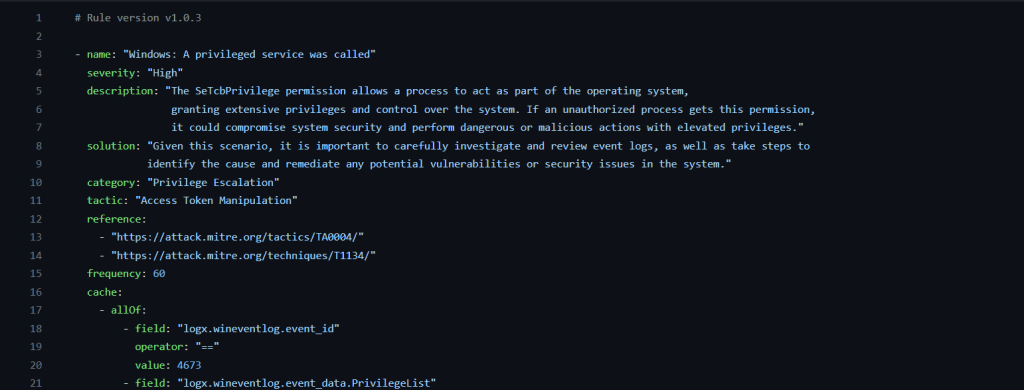
Correlation rules are essential to how a SIEM system detects and alerts on suspicious activities. But when these rules are too broad or configured incorrectly, they can cause a large volume of false positives. Tuning them for greater precision is therefore critical. In Unified Security Stack, for instance, correlation rules can be adapted to an organization's particular needs.
Steps to Modify Correlation Rules:
Spot Underperforming Rules: Begin by calling out the rules responsible for an excessive volume of false positives.
2. Adjust Thresholds and Parameters: Modify thresholds, conditions, or other parameters to make rules more stringent or relaxed based on the requirement.
3. Test Modifications: Before deploying modified rules, test them in a controlled environment to assess their effectiveness.
4. Deploy and Monitor: Once satisfied with the modifications, deploy the updated rules, and continue monitoring for any necessary further tweaks.
Tuning correlation rules may be complicated. The resource below offers sequential instructions for tailoring and building your own rules with YML files.
3. Leverage AI Powered by RAG and Statistical Analysis
A basic AI integration alone cannot reliably distinguish a false positive from a real incident, but retrieval augmented generation (RAG) and statistical analysis can supply enough contextual information to a Large Language Model (LLM) such as GPT4 or Llama to help SOC analysts do their jobs effectively.
Unified Security Stack's native Open Source AI takes care of incident identification and investigation, along with false positive handling. This AI functions as a 24/7 Security Analyst that helps cut through noise in event-heavy systems.
Although AI is not yet integrated with every SIEM system on the market, this is clearly a trend more vendors are embracing. SIEM users should also recognize the risks of relying on pure AI without RAG or Statistical analysis. Evaluating vendors that apply AI properly is essential for success.
Vendor Agnostic Approach
Although Unified Security Stack is a useful example, the principles and steps described here are vendor agnostic. By understanding and applying these techniques, organizations can significantly enhance their SIEM systems' accuracy, no matter which platform they use.
By adopting a systematic and iterative approach to configuring tag and correlation rules, organizations can significantly reduce false positives in their SIEM systems, allowing for a more focused and effective security monitoring strategy.