Build Effective Incident Response Playbooks a How-To Guide
An after-hours alert arrives. A questionable login expands into endpoint detections, leadership wants to know if customer data is at risk, and soon the team is managing Slack conversations, ticket changes, legal inquiries, and many console tabs at once. Most organizations do not break down at this point because staff lack concern. They break down because response knowledge sits in individual memory, fragmented documents, and stale runbooks.
That's where incident response playbooks Cease to be administrative overhead and begin functioning as operational control. A solid playbook does more than instruct analysts to contain and eradicate. It specifies which telemetry must already be present, what account can isolate a host, who authorizes external communication, when legal is brought in, and which evidence must be retained for audit. During pressure, that clarity matters more than polished documentation.
Table of Contents
- From Chaos to Control Your Playbook Starting Point
- Designing Your First High-Impact Playbooks
- Mapping Detections to Automated Playbook Actions
- Example Playbooks for Common Cyber Threats
- Testing Validation and Measuring Playbook Effectiveness
- Mapping Playbooks to Your Compliance Requirements
From Chaos to Control Your Playbook Starting Point
Incident response frequently begins with improvisation. One analyst reviews the SIEM, another contacts the endpoint team, a third opens a ticket, and leadership requests an update before anyone has confirmed scope. Each passing minute creates more friction, since every responder is making minor decisions that should have been settled beforehand.
A playbook changes that by becoming the single source of truth for a given incident type. It is not merely a checklist. It is an operating model that defines what starts the process, who owns every action, which communication path to follow, which steps are required, and what end state allows the incident to advance or close.
Practical rule: If responders must still argue over ownership, escalation, or access to tooling while the incident is underway, the playbook is not complete.
The helpful mindset change is this. Your incident response plan sets broad policy. Your incident response playbooks set execution. That is why mature teams do not draft a single massive document for every conceivable event. They build targeted playbooks that connect detection, technical action, governance, and evidence handling.
A strong starting point usually includes these building blocks:
- Incident trigger: The trigger that launches the workflow, whether an alert, a report, or a condition.
- Scope boundary: Which systems, business units, or data types fall within the scope of the playbook.
- Named roles: The analyst, engineer, manager, legal contact, and communications owner assigned to particular actions.
- Required actions: The actions required before containment, recovery, or closure.
- Decision points: The points at which severity, impact, or regulatory exposure alter the course.
- End state: The condition that signals containment, eradication, recovery, or escalation.
The teams that see value soonest do not attempt to document every cyber event imaginable. They begin with a handful of repeatable, high-impact scenarios and make them executable. That is the first genuine move from chaos toward control.
Designing Your First High-Impact Playbooks
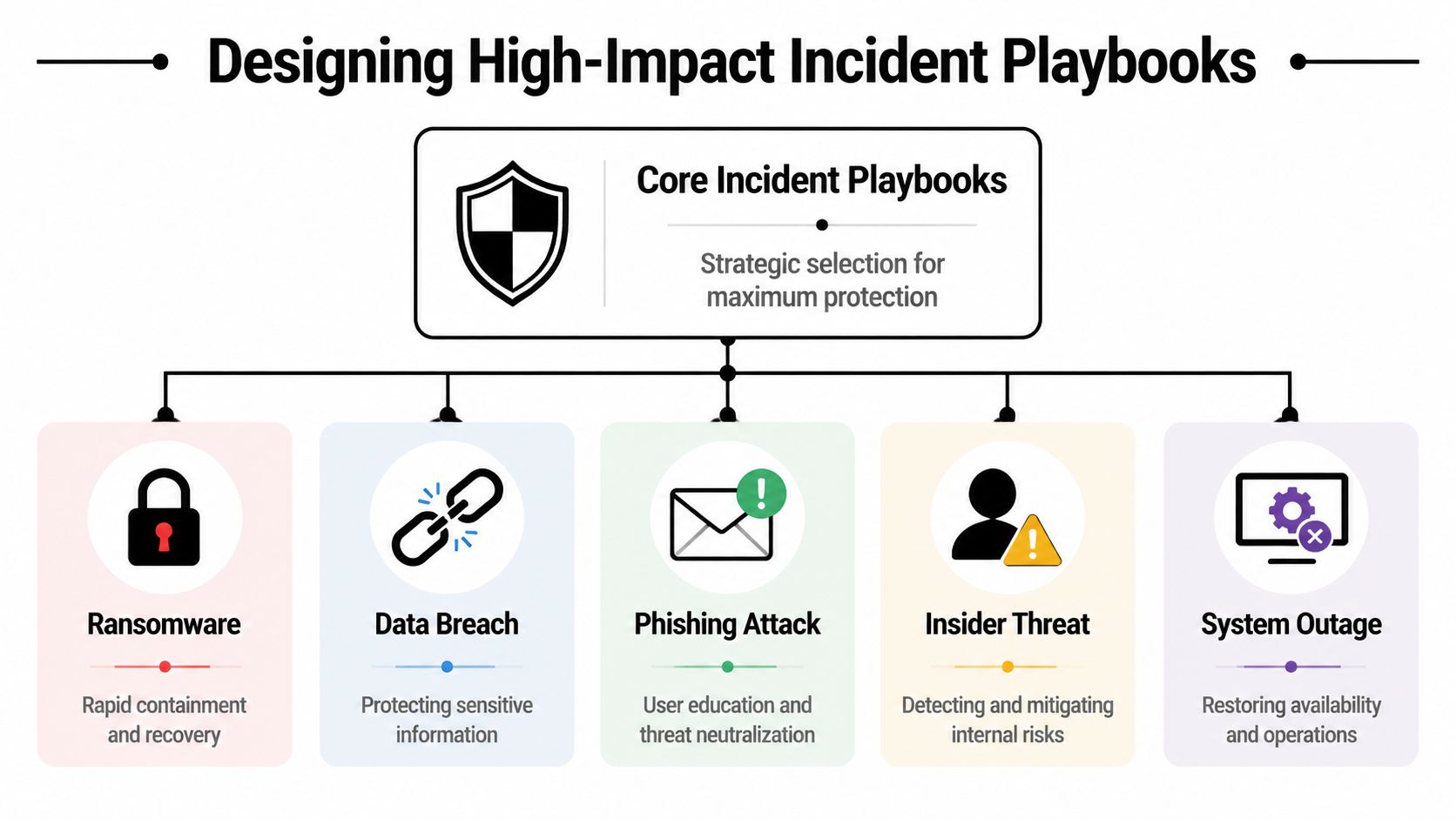
Industry guidance increasingly treats incident response playbooks as a structured operating modelrather than serving as a simple checklist. The NIST lifecycle generally comprises four phases: Preparation, Detection and Analysis, Containment/Eradication/Recovery, and Post-Incident Activity. Experts also advise starting with only 3 to 5 high-value scenarios rather than trying to document everything at once (Swimlane guidance on incident response playbooks).
Why small beats comprehensive
That advice may sound modest, yet it is one of the greatest a-ha moments in playbook design. Teams often try to cover everything and end up creating a binder no one can execute. A smaller set of playbooks demands precision.
Begin with scenarios in which your team already encounters recurring activity, operational pain, or compliance exposure. In many environments, that includes items such as phishing, ransomware, data breach, cloud misconfiguration, or malware on managed endpoints. The precise list matters less than selecting incidents where a defined trigger can consistently initiate a repeatable response.
This is the logic behind building a playbook program, not a document library:
If you are formalizing this within a SOC workflow, a platform that links detection and response is important. Unified Security Stack's incident response workflow overview is one example of how teams connect alerts, case handling, and response actions into one operating flow rather than dividing them among disconnected tools.
What a usable playbook actually contains
Specificity separates a useful playbook from a decorative one. A usable playbook answers what the responder needs when pressure hits.
Include these elements:
Objective and end state
Establish what success looks like. A goal like contain infected endpoint and preserve evidence is workable. A goal like respond to malware incident is not.Initiating conditions
State the trigger clearly. A high-confidence detection, a user report that includes attachment evidence, impossible travel combined with token abuse, or a DLP event linked to regulated data all serve as valid starting points.Scope and exclusions
Specify whether the playbook covers corporate endpoints only, cloud workloads, contractors, production systems, or regulated datasets. Also identify what the playbook does not cover and must be escalated.Roles and approvals
Give every action a clear owner. Technical work requires owners, and so do choices like who may approve host isolation, disable an executive account, or contact a customer.Communication matrix
In this area, many playbooks stay too vague. Specify internal updates, legal review triggers, executive escalation, customer-facing ownership, and vendor coordination. When several teams are allowed to communicate externally, conflicting messages are nearly certain.Required versus optional actions
Distinguish actions that have to occur from those that might occur based on evidence. This limits hesitation while the team works to contain active impact.
A playbook ought to ease decision fatigue, not add one more document that people must interpret.
One design practice reliably delivers value. Construct the playbook in reverse from its dependencies. If the workflow calls for host quarantine, determine the precise EDR integration, approval path, and service permission needed to make that step possible. If it calls for account activity review, state where those identity logs originate and who is allowed to access them. That is how a playbook becomes executable rather than aspirational.
Mapping Detections to Automated Playbook Actions
A playbook becomes operational only when a detection can activate it cleanly. Many programs get stuck here. The document exists and the flowchart looks strong, yet no one has mapped the alert logic, necessary telemetry, or tool permissions that allow response to start without manual scrambling.
Microsoft's playbook format explicitly calls out required logging and roles/permissions as prerequisites. This is important because automation relies on correct telemetry from cloud services, endpoints, and network devices being available at incident start, not afterward when someone realizes evidence is missing (Microsoft incident response playbook prerequisites).
A useful way to view this is that each automated action carries a dependency chain.
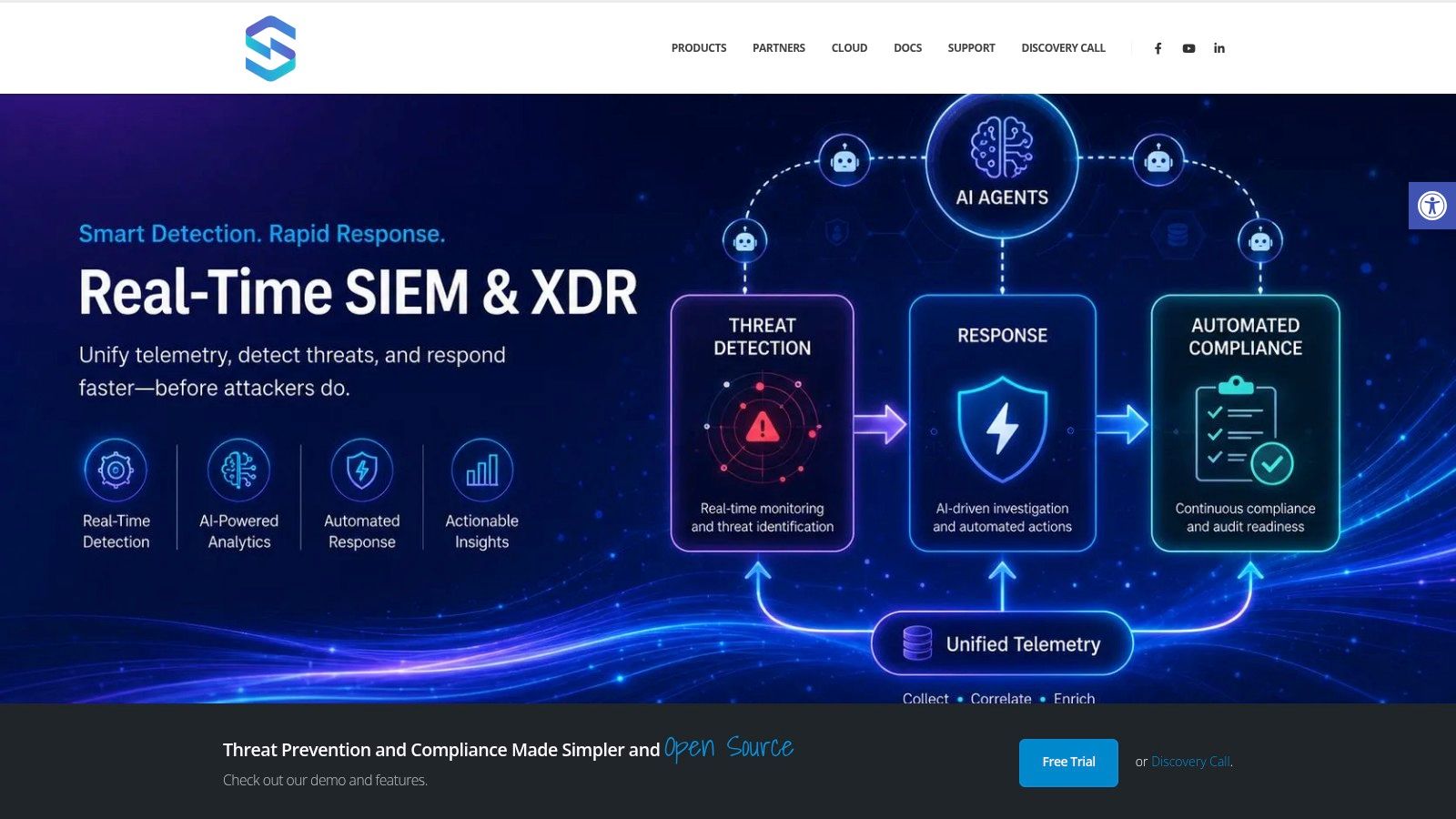
Teams that implement this in a SOAR workflow typically bring detections, enrichment, and response together in a single place. Unified Security Stack's SOAR automation approach illustrates the model clearly: correlate events, launch predefined actions, and retain response evidence along the same operational path.
The prerequisite map most teams skip
When a playbook calls for disabling an account, revoking a token, or isolating an endpoint, that step should link to three prerequisite categories.
- Telemetry: The log data or indicators that verify the condition. These include identity logs, endpoint telemetry, cloud audit activity, firewall events, email security signals, or DLP alerts.
- Authority: The permissions, roles, and approvals required to take action. Service accounts, delegated admin roles, or designated human approvers.
- Workflow linkage: The ticketing, notification, and evidence steps that show the action occurred and transfer the case to the next owner.
Without that map, automation breaks in predictable ways. The alert triggers, but the identity platform does not send enough detail. The SOAR can open a case, but it cannot isolate the host. The analyst can see the incident, but legal is never included when the data classification changes.
Four scenarios that show the handoff problem
A phishing alert makes a good initial case. The email gateway marks a suspicious message. The playbook works effectively only when mail logs show recipients, the investigation workflow can trace message spread, and the response path can delete similar messages or disable accounts once compromise is confirmed. Without those links, the team resorts to forwarding screenshots and manually rebuilding exposure.
A compromise of an endpoint unfolds in a clear order. Suspicious process behavior is spotted by EDR detection. The automated workflow can enrich the alert with host owner, business criticality, and recent authentication activity, then isolate the endpoint once severity crosses a set threshold. This is feasible only when the EDR integration allows isolation and the service account has authorization to carry it out.
A cloud misconfiguration incident reveals a different gap. Detection might originate from configuration monitoring or cloud audit activity, yet response frequently needs another owner, such as cloud engineering. A solid playbook does not merely create a case. It defines the handoff, necessary evidence, rollback owner, and validation step before the issue is considered contained.
Third-party incidents are often the most chaotic. A vendor notifies you of suspicious access, or your own detections reveal abnormal partner activity. Technical containment may be limited because the affected system is not fully under your control. In this case, the playbook needs clear vendor coordination, leadership notification, and legal review triggers. Without them, responders waste time deciding who owns the external conversation.
Missing logs do more than slow an investigation. They prevent containment because the team cannot prove what happened, how far it spread, or whether the response action is safe to perform.
Even the strongest automated incident response playbooks do not automate every step. They handle the repeatable elements and leave human judgment for impact assessment, legal risk, customer communication, and exception handling. That balance keeps the workflow rapid without making it reckless.
Example Playbooks for Common Cyber Threats
A lot of incident response guides end at technical actions. Contain. Eradicate. Recover. During actual incidents, that falls short. For events affecting customers or regulated settings, the tougher issue is who communicates what, at what time, and to whom. This makes communication and handoff design for each scenario so important, particularly when support, engineering, leadership, or regulators might all require synchronized updates (Pylon guidance on communication ownership in incident response playbooks).
Ransomware and phishing need different control points
A ransomware The playbook should begin with confidence scoring and control of the blast radius. When several hosts display encryption activity, the response path generally focuses on isolating hosts, reviewing accounts, checking segmentation, and validating backups. The communication branch requires an explicit trigger for leadership involvement, since business disruption often matters before root cause is fully certain.
Waiting for full forensic certainty before taking action does not work. With ransomware, delay increases the impact. The playbook should set the threshold for immediate containment and keep it distinct from the investigation work that follows.
A phishing The playbook needs closer coordination across identity and user functions. The trigger could be a user report, a secure email gateway alert, or a suspicious sign-in tied to the reported message. Early actions typically cover message analysis, recipient search, account review, and token or password response if compromise is suspected.
Communication here differs from ransomware. In this case, the message to affected users has to be quick, precise, and owned by a single function. When support, security, and management each send their own notices, users become confused and remediation drags.
Data exfiltration and lateral movement expose coordination gaps
A data exfiltration The playbook should start with preserving evidence. Before anyone hurries to cut off access, the team must have sufficient logging to determine what data moved, from where, by whom, and through which channel. That can include cloud audit records, endpoint telemetry, DLP alerts, and identity activity.
Within the playbook, legal and compliance frequently require an early branch. If regulated data may be involved, the communication owner cannot be selected on an ad hoc basis. Teams seeking a plain-language external resource for executive stakeholders often benefit from a concise guide such as what to do after a breach, particularly when the discussion moves from technical containment to business obligations.
A lateral movement The playbook centers more on containment sequencing than on one visible event. The trigger may be unusual authentication patterns, misuse of administrative tools, or internal system access that deviates from the expected path. Teams often err first by handling each alert in isolation. Once indicators point to movement between systems, the playbook should require a wider hunt scope.
Here, communication often remains internal initially, yet ownership still counts. Infrastructure, identity, and security teams need a single incident lead and a single update cadence. If not, one team may reset credentials while another is still gathering evidence from those same accounts.
Sample Incident Response Playbook Comparison
| Threat Type | Primary Trigger(s) | Key Containment Actions | Primary Communication Need |
|---|---|---|---|
| Ransomware | Endpoint encryption behavior, multiple affected hosts, abnormal process activity | Isolate hosts, review account activity, validate backup path, segment affected systems | Leadership updates tied to operational impact |
| Phishing | User-reported email, email security alert, suspicious sign-in after message delivery | Search and remove similar emails, review impacted accounts, revoke sessions if needed | Clear user instructions from a single owner |
| Data Exfiltration | DLP alert, unusual data movement, cloud audit anomaly, suspicious outbound transfer | Preserve evidence, restrict access, validate scope, coordinate with data owners | Early legal and compliance alignment |
| Lateral Movement | Abnormal authentication chain, privileged access misuse, internal pivot indicators | Limit privileged access, contain affected systems, expand investigation scope | Tight coordination between identity, infra, and security teams |
For any of these threats, a solid playbook follows two timelines at once. One is the technical response timeline. The other is the communication timeline. Should your document cover only the first, it will not hold up during an actual incident.
Testing Validation and Measuring Playbook Effectiveness
A playbook that has not been tested remains theoretical. The document might read well, but until people validate the trigger logic, approvals, data access, and communication handoffs, no one knows if it functions under pressure.
Guidance from practitioners agrees on the lifecycle that playbooks ought to standardize. Detection, analysis, containment, eradication, recovery, and post-incident review. It likewise advises reviewing these on a 4 to 6 month cycle and after every incident so ownership and communication paths don't go stale (Atlassian guidance on maintaining incident response playbooks).
Test the decisions not just the tooling
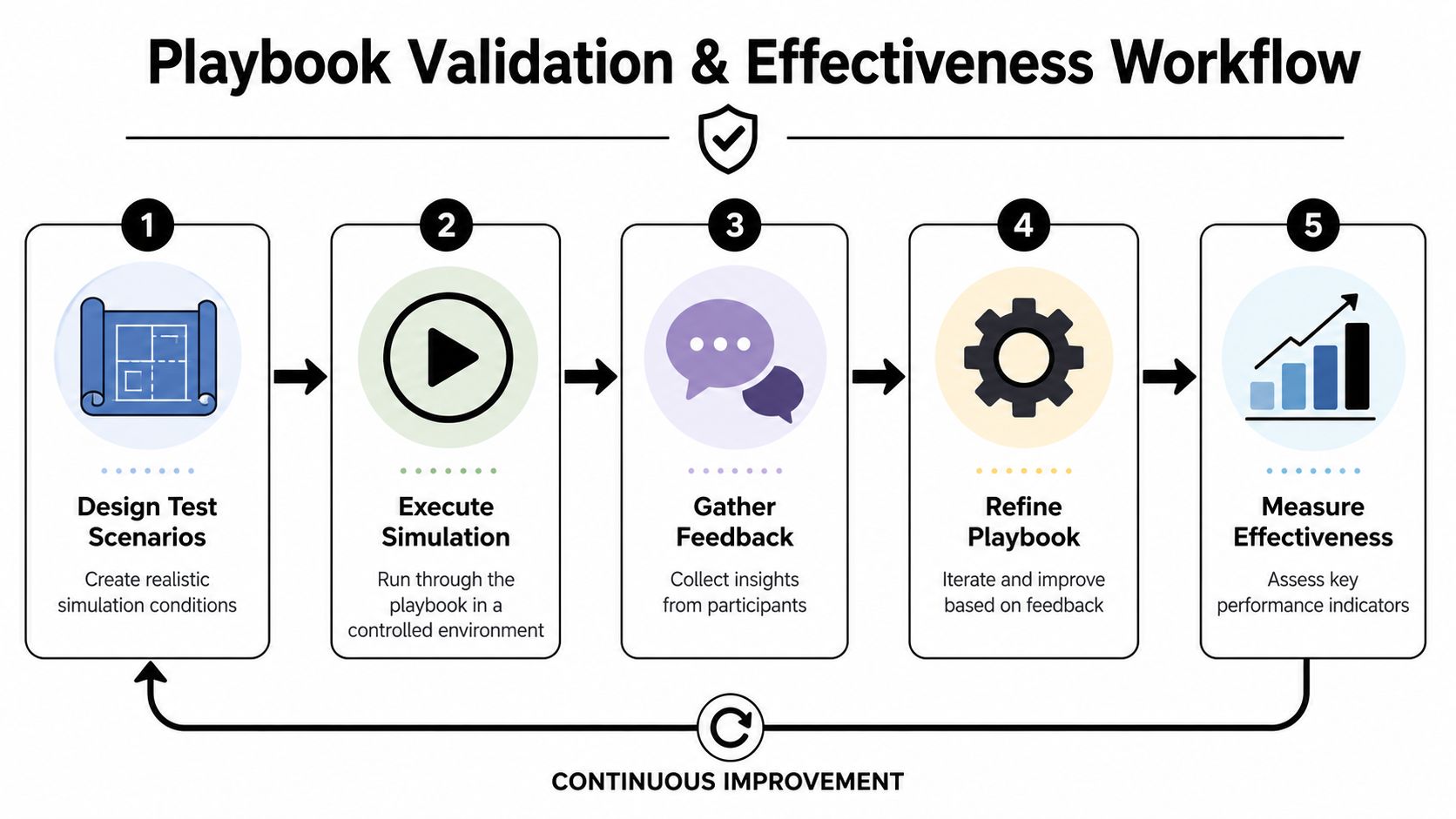
The most valuable tests are not always the most technical. Begin by validating the quality of decisions.
- Tabletop exercises: Use them to check escalation logic, legal participation, customer messaging, and leadership reporting. A tabletop exercise quickly shows whether people understand who owns each branch.
- Control validation drills: Exercise concrete actions like disabling accounts, isolating hosts, or creating tickets. Gaps in permissions and API failures then become clear.
- Evidence checks: Verify that the logs and artifacts referenced in the playbook are retained, reachable, and connected to the case record.
- Post-incident reviews: Following an actual event, compare what occurred with the documented flow. The purpose is not to assign blame. It is to determine whether the playbook matched reality.
The strongest lesson from testing is usually not "the team forgot a step." It's "the environment couldn't support the step the playbook assumed."
That difference is important. An outdated contact list is a documentation issue. An isolation action that no system account can carry out is an architectural issue.
Use reviews as operational evidence
Mature programs regard testing as more than preparation work. They see it as evidence that controls function. A playbook that has been reviewed, a simulation that has been logged, and a postmortem that has been documented demonstrate that the organization does not rely on policy statements alone. It has a working response process with feedback loops.
Evaluate effectiveness by combining operational and governance indicators. Time-based metrics can be useful internally, yet in many organizations the questions that reveal the most are qualitative:
- Was the correct playbook activated at the correct time?
- Did the necessary logs exist at the initial review?
- Was there a clear owner for each action?
- Was communication consistent between technical and non-technical teams?
- Did the post-incident review yield concrete changes rather than broad observations?
That discipline during review is what sustains incident response playbooks. Without it, ownership shifts, integrations fail without notice, and the next incident reveals the deterioration all at once.
Mapping Playbooks to Your Compliance Requirements
Security leaders frequently treat response operations and compliance work as separate. In practice, the two should strengthen each other. A playbook executed well generates the records auditors and assessors request: what prompted the incident, who authorized containment, what evidence was gathered, when stakeholders were informed, and how the organization confirmed recovery.
Turn response activity into audit evidence

Centralized evidence handling is important here. When detections, case notes, escalation records, and response logs reside in separate systems, proving that controls were executed becomes slow and brittle. Teams that use a unified logging approach can connect alerts and response artifacts more cleanly. Centralized log management is a practical foundation since it maintains the telemetry and case context that keep a playbook auditable.
The mapping to frameworks is usually straightforward in concept even if execution is messy:
- CMMC and SOC 2: Demonstrate that incidents are detected, escalated, investigated, and documented in a consistent manner.
- HIPAA security incident procedures: Demonstrate who managed the incident, what evidence was retained, and how the organization oversaw response and follow-up.
- PCI DSS incident response expectations: Demonstrate that response actions were defined, carried out, and reviewed.
- ISO 27001 programs: Demonstrate that incident handling is documented, repeatable, and enhanced over time.
Build once and report many times
Documentation quality matters for this reason as well. A single playbook can serve responders, auditors, legal reviewers, and risk owners when it clearly links operational steps to governance outcomes. Organizations developing broader ISO-aligned documentation practices may also benefit from resources such as DocuWriter.ai's ISO 27001 solution, particularly when they must translate technical controls into consistent policy and evidence narratives.
One warning deserves to be stated directly. Compliance language must never take the place of operational clarity. A playbook that sounds audit-friendly but does not define logs, permissions, and handoffs will let down the people using it during an incident. The strongest programs create the playbook for operators first, then map its artifacts to compliance requirements afterward.
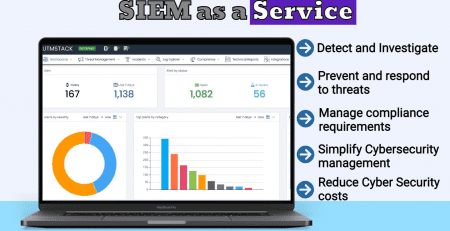
If you're trying to move from scattered runbooks to executable incident response playbooks, Unified Security Stack is a platform worth evaluating. It brings together SIEM, SOAR, XDR, log management, and compliance workflows so teams can link detections, automated actions, and audit evidence within the same operating path.